


Aryan's blog

Reading List

What I'm reading, what I want to read, and what stuck with me. Not a "top 100" list. These are the things that actually changed how I think. Updated April 2026.

Blogs I keep going back to

Anonymous researcher. Writes about AI, statistics, psychology, self-experimentation. What makes Gwern different is that every claim has methodology attached. No vibes-based analysis. His work on scaling laws was years ahead of the current conversation. The site design alone is worth studying.
→ The Scaling Hypothesis
Venkatesh Rao · ribbonfarm.com (archived) · now at Contraptions
Indian origin, PhD in control theory, independent consultant. Where most tech writers simplify things into frameworks, Rao goes the other direction. He makes things more complex because they are more complex. "The Gervais Principle" is a cult classic on organizational power. But the deeper stuff is on temporality, narrative-driven decisions, and how perception itself can be refactored. His book Tempo is genuinely underrated.
→ The Gervais Principle
Used to lead iOS education at Apple. Now does independent research on how humans actually remember things. Spaced repetition, tools for thought, knowledge compounding. The site itself is the product: a public network of notes that evolve over time. Closest intellectual cousin to what we're building at NeoSapien.
→ Evergreen Notes
Writes about how to actually understand things vs having opinions about things. Publishes rarely. Every piece is dense. "How To Understand Things" made me rethink how I learn.
→ How To Understand Things
Where everyone else has takes, Luu has measurements. Hardware/software performance, developer productivity myths, why "best practices" are usually cargo-culted. The site has no CSS. That's not laziness, it's a statement. Consistently the most useful technical writing I find.
→ Everything is Broken
Berggruen Institute · noemamag.com
Long-form on philosophy, technology, governance, culture. One of the few places that treats Indian and Chinese philosophical traditions as living intellectual frameworks and not museum exhibits. Rao and others publish their most ambitious work here.
Bryan Cantrill · oxide.computer/blog
They're building server racks from scratch. Hardware and software, small team, strong opinions about culture. Their RFD (Request for Discussion) documents are how I want NeoSapien to make decisions eventually. Cantrill's founder mode response is better than the original essay.
→ Reflections on Founder Mode
Scott Alexander · astralcodexten.substack.com
Psychiatrist who writes about AI risk, coordination failures, and human cognition. His book reviews are better than most original writing. "Meditations on Moloch" is the essay I wish I'd read five years earlier. It explains why systems produce outcomes nobody wants.
→ Meditations on Moloch
Neuroscientist and novelist. Hoel works on consciousness, causal emergence, and the neuroscience of dreams. His "Overfitted Brain" hypothesis argues that dreams exist to prevent overfitting in neural networks - literally the same concept from ML applied to biological brains. He also wrote a novel (The Revelations) about consciousness researchers. One of the few people writing at the intersection of hard neuroscience, AI theory, and actual literary quality.
→ browse recent posts
Professor of cognitive and computational neuroscience at Sussex. His framework: consciousness is a "controlled hallucination" - the brain is a prediction machine that generates your experience of reality from the top down. Perception isn't passive reception, it's active construction. His TED talk has 15M+ views but the real depth is in his academic writing and his book Being You. Directly relevant to how we think about what "understanding" a conversation means in the pipeline.
→ Being You
Andrés Gómez Emilsson · qualiacomputing.com
This one is out there. Emilsson attempts to formalize the structure of conscious experience mathematically. Symmetry theory of valence, hyperbolic geometry of qualia. It's speculative and sometimes wild but he's asking the right question: can the texture of experience be described formally? Nobody else is trying this hard to bridge contemplative phenomenology and computational theory. Read with healthy skepticism but open curiosity.
→ start anywhere, follow what pulls you
Ben Thompson · stratechery.com
Strategy and technology. "Aggregation Theory" is how I think about platform businesses now. His Apple hardware-software coverage helps me think about what we're actually building: not a device, not an app, but a layer. Paid and worth it.
→ Aggregation Theory
Not a blog. More like a public thinking space. His /labs page on what made PARC, Bell Labs, and ARPA work is a reading list inside a reading list. /fast is about things that were built surprisingly quickly. /advice is surprisingly personal.
→ /labs

Books

currently reading

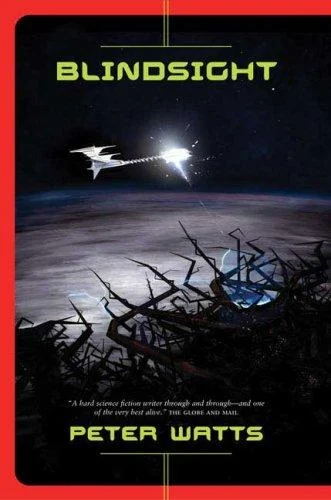
Blindsight fiction
Peter Watts
Watts thinks consciousness is a bug, not a feature. Intelligence can exist without it. Awareness might actually slow you down. This is the exact opposite of everything I believe through Advaita Vedanta, which is exactly why I need to read it carefully. The appendix cites every neuroscience paper behind every plot point. I want to write a response from Shankara's perspective when I'm done.
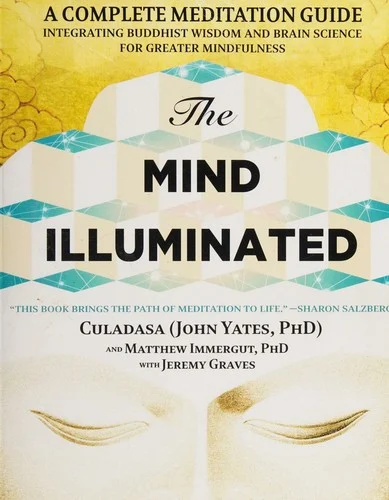
The Mind Illuminated neuroscience
Culadasa (John Yates)
A neuroscientist who was also a meditation master. He maps every stage of meditation practice to specific cognitive processes - attention, awareness, metacognition, how the brain consolidates experience. Most meditation books are either too woo or too dry. This one walks the line perfectly. The model of consciousness as a "mind-system" made up of sub-minds that share a common workspace is the clearest framework I've found for what actually happens when you sit down and pay attention. I'm using it alongside my existing Vedantic practice and it's filling in gaps I didn't know were there.

up next

Seeing Like a State history
James C. Scott
Why large-scale plans to improve the human condition fail. Scott's idea of "legibility" - the need to make messy reality simple enough to control - explains why metrics kill what they measure, why dashboards lie, and why our pipeline observability will never capture what actually matters about a conversation. Everyone building systems that model human behavior should read this.
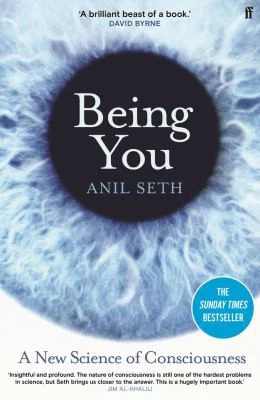
Being You neuroscience
Anil Seth
Seth's core idea: your experience of reality is a controlled hallucination. The brain doesn't passively receive the world, it actively generates it based on predictions. Perception is a best guess, not a readout. This has obvious implications for what NeoSapien is doing when it processes a conversation - we're building a system that interprets another system's hallucination. I want to read this alongside The Mind Illuminated because meditation is basically the practice of noticing the hallucination in real time.
The Master and His Emissary neuroscience
Iain McGilchrist
Not the pop-science left brain/right brain thing. McGilchrist is a psychiatrist, neuroscientist, and literary scholar who spent 20 years on this. His argument is that the left hemisphere's narrow, grasping, categorizing attention has slowly taken over Western civilization. The right hemisphere's broad, relational, contextual mode keeps getting pushed aside. I want to read this in the context of my Sakshi Bhava practice - the witness consciousness feels like what McGilchrist calls right-hemisphere attention.
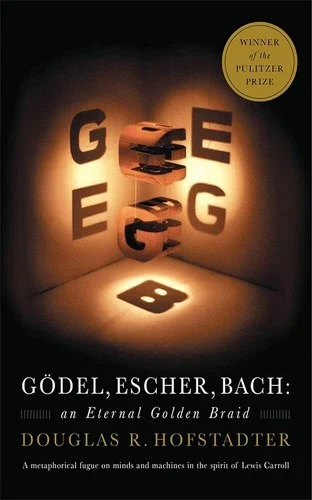
Gödel, Escher, Bach
Douglas Hofstadter
Self-reference, strange loops, consciousness as something that emerges when a system becomes complex enough to model itself. Hofstadter's "I" is a strange loop. It's basically a Western formalization of the self-inquiry I do through Vedanta but arrived at through mathematics and music and art. I've been circling this book for years. Time to actually sit down with it.
The Embodied Mind neuroscience
Francisco Varela, Evan Thompson, Eleanor Rosch
Three cognitive scientists who actually took Buddhist philosophy seriously as a research program. Their argument: cognition isn't computation happening in the brain. It's enacted by the whole organism in coupling with its environment. There's a chapter comparing Madhyamaka Buddhism with connectionism that doesn't exist anywhere else in Western cognitive science. This directly challenges the information-processing model our pipeline assumes.
Ficciones fiction
Jorge Luis Borges
Short stories. Each one is a thought experiment. "The Library of Babel" is an infinite library containing every possible book. "The Garden of Forking Paths" is every possible outcome existing simultaneously. Borges basically invented the architecture of the internet and the problems of AI in the 1940s. Thirty pages and you'll think about memory systems differently.
Solaris fiction
Stanisław Lem
Where Watts asks "can intelligence exist without consciousness?", Lem asks something harder: "can consciousness exist that we are fundamentally unable to understand?" The alien here isn't hostile or friendly. It's just incomprehensible. After spending two years building systems that process human conversations, I expect this will hit differently.
Impro psychology
Keith Johnstone
Supposedly about improvisational theater. Actually about status transactions, creativity under pressure, and how education destroys the thing it claims to develop. Johnstone's analysis of how people unconsciously negotiate status in every interaction is more useful for managing people than any leadership book. His chapter on masks and trance is the most practical Western description of altered states I've come across. Short. Reads in a day.
The Making of the Atomic Bomb history
Richard Rhodes
Small team, impossible deadline, world-altering consequences. The management story of Los Alamos is what everyone now calls "founder mode" except Oppenheimer did it in the 1940s with actual existential stakes. The deeper story is what happens to the builders after they've built the thing. 900 pages and it moves fast.
Tempo
Venkatesh Rao
Decisions aren't rational or irrational. They're temporal. You respond to the narrative structure of unfolding events, not to "information." A founder's real skill is reading the tempo of a situation and acting at the right moment. This is the only decision-making book I've found that treats time as the primary variable.
The Quantum Thief fiction
Hannu Rajaniemi
Post-human heist novel. Memory is currency, privacy is a fundamental right, identity is fluid. A moving city on Mars where every citizen's memories are time-locked and traded. Rajaniemi has a PhD in mathematical physics. If you're building a memory layer for human-AI interaction, this is what that future could look like.

later this year

Behave neuroscience
Robert Sapolsky
Sapolsky works backwards from a behavior and asks: what happened one second before? One minute? One hour? One lifetime? One million years? It's the most complete account of why humans do what they do. Hormones, childhood, evolution, culture, neurobiology - all woven together. He's also a beautiful writer. 800 pages but it never drags. I want to read this alongside the Vedantic material because Sapolsky is a hard determinist - he thinks free will is an illusion - and the Vedantic response to that is interesting and unexpected.
Other Minds neuroscience
Peter Godfrey-Smith
A philosopher of science who spent years diving with octopuses. Their intelligence is distributed across their arms. No central executive. This is what genuinely alien cognition looks like - not science fiction aliens, but something real and alive that evolved consciousness on a completely different branch of life.
The Revelations fiction
Erik Hoel
A novel about consciousness researchers. Hoel is a neuroscientist himself (runs The Intrinsic Perspective), so the science isn't hand-waved. It's a murder mystery set inside a consciousness lab, but the real tension is the ideas. What would it actually mean to solve the hard problem? What would happen to the people who solved it? Fiction about scientists by an actual scientist.
Anathem fiction
Neal Stephenson
Monastic mathematicians, Platonic reality, consciousness. Stephenson builds a whole civilization where thinkers live in "concents" separated from the secular world. The philosophical depth is on par with the Vedantic canon but told as hard science fiction. Long. Worth it.
The Denial of Death psychology
Ernest Becker
Everything humans build - religion, culture, art, companies - is a defense mechanism against the awareness of death. Becker calls it the "immortality project." This will frame even a Karma Yoga practice as a potential immortality project, which is uncomfortable. I want to read it specifically because it'll be hard to argue with.
The Man Who Mistook His Wife for a Hat neuroscience
Oliver Sacks
Clinical stories of patients with neurological conditions. A man who can't recognize faces. A woman who lost her sense of her own body. A musician who can only function while music is playing. Sacks writes about broken brains with so much warmth that you end up understanding the normal brain better. Each case study is a natural experiment in consciousness. Short chapters, reads like fiction.
Piranesi fiction
Susanna Clarke
A man lives alone in an infinite house of halls and staircases, filled with statues and ocean tides. He doesn't know how he got there. He doesn't know there's an outside. Short, warm, and quietly devastating. The opposite of everything else on this list in tone. Supposedly about mystery. Actually about what it means to pay attention to the world you're already in.
Echopraxia fiction
Peter Watts
Blindsight sequel. Set on Earth during the same timeline. There's a hive-mind of monks who've transcended individual consciousness for collective superintelligence. Watts basically writes science fiction Advaita Vedanta and then tries to break it. Read after Blindsight.
Dealers of Lightning history
Michael Hiltzik
Xerox PARC invented the personal computer, the GUI, Ethernet, and the laser printer. Then Xerox failed to commercialize any of it. Brilliant builders, unlimited resources, no market connection. The cautionary tale for anyone whose technology is ahead of their business model.
The Dream Machine history
M. Mitchell Waldrop
Licklider and the creation of personal computing. One person with deep conviction about human-computer symbiosis built the institutions that made it real. This is the origin story of the interface layer everything runs on now.
Skunk Works history
Ben Rich
How Lockheed built the SR-71 with a tiny team and insane deadlines. Kelly Johnson's 14 Rules for running a Skunk Works read like they were written for a startup hardware team.
Finite and Infinite Games
James Carse
Finite games are played to win. Infinite games are played to keep playing. Building a company is a finite game. Building yourself through a company is infinite. Closest Western thing to Karma Yoga I've found.

already read

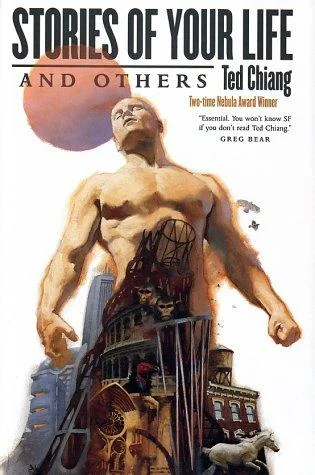
Stories of Your Life and Others fiction
Ted Chiang
Every story is a perfect machine. "Story of Your Life" did more for my understanding of how language shapes perception than any linguistics paper. "Understand" is what superintelligence actually feels like from the inside. Chiang doesn't waste a sentence. I reread "Exhalation" when I need to remember why I build things.
The Three-Body Problem trilogy fiction
Liu Cixin
I wrote about this here. Dark forest theory changed how I think about competitive strategy. The scale of thinking - centuries, civilizations, dimensions - is something Western sci-fi rarely attempts. The wallfacer concept alone was worth the entire trilogy.
Foundation fiction
Isaac Asimov
Psychohistory is basically what we're trying to build with personal knowledge graphs, except at individual scale instead of civilizational. The idea that you can model the future if you have enough data about human behavior is the thesis underneath NeoSapien. Asimov saw it decades before anyone had the compute.
Revelation Space fiction
Alastair Reynolds
Gothic space opera. Reynolds is an astrophysicist and it shows. No FTL travel, no shortcuts, just the actual physics of deep space and deep time. The Inhibitors as a concept - ancient machines that exterminate any civilization that gets too loud - is the dark forest idea but arrived at independently and with more dread.
Freedom from the Known
J. Krishnamurti
Krishnamurti refuses to give you a system. He refuses to be a guru. He just keeps pointing at the thing you're avoiding. "The moment you follow someone you cease to follow Truth." This book breaks every framework, including its own. I come back to it when I notice myself getting too attached to my own ideas about how things should work.
Shiva Sutras
Kashmir Shaivism
77 aphorisms on the nature of consciousness, each one a seed that unfolds over years of practice. Not philosophy in the academic sense. More like compressed instructions for direct investigation. I wrote about Spanda (which comes from this tradition) here.
Ashtavakra Gita
Advaita Vedanta
The most radical text in the Vedantic canon. Ashtavakra doesn't build up to the truth gradually. He starts at the end: you are already free. The whole dialogue is about why you keep pretending you're not. I read a few verses before meditation sometimes. It works better than coffee.