
The Star Destroyer takes a while to pass over the camera. By the time it has, you've got the point: whoever built it has resources. Give them another million years and it's easy to imagine the same thing on a larger scale, with whole stars put to work.
I find it harder to imagine what the inhabitants would want after all that time. We give them a million years of progress and somehow they still want more territory.
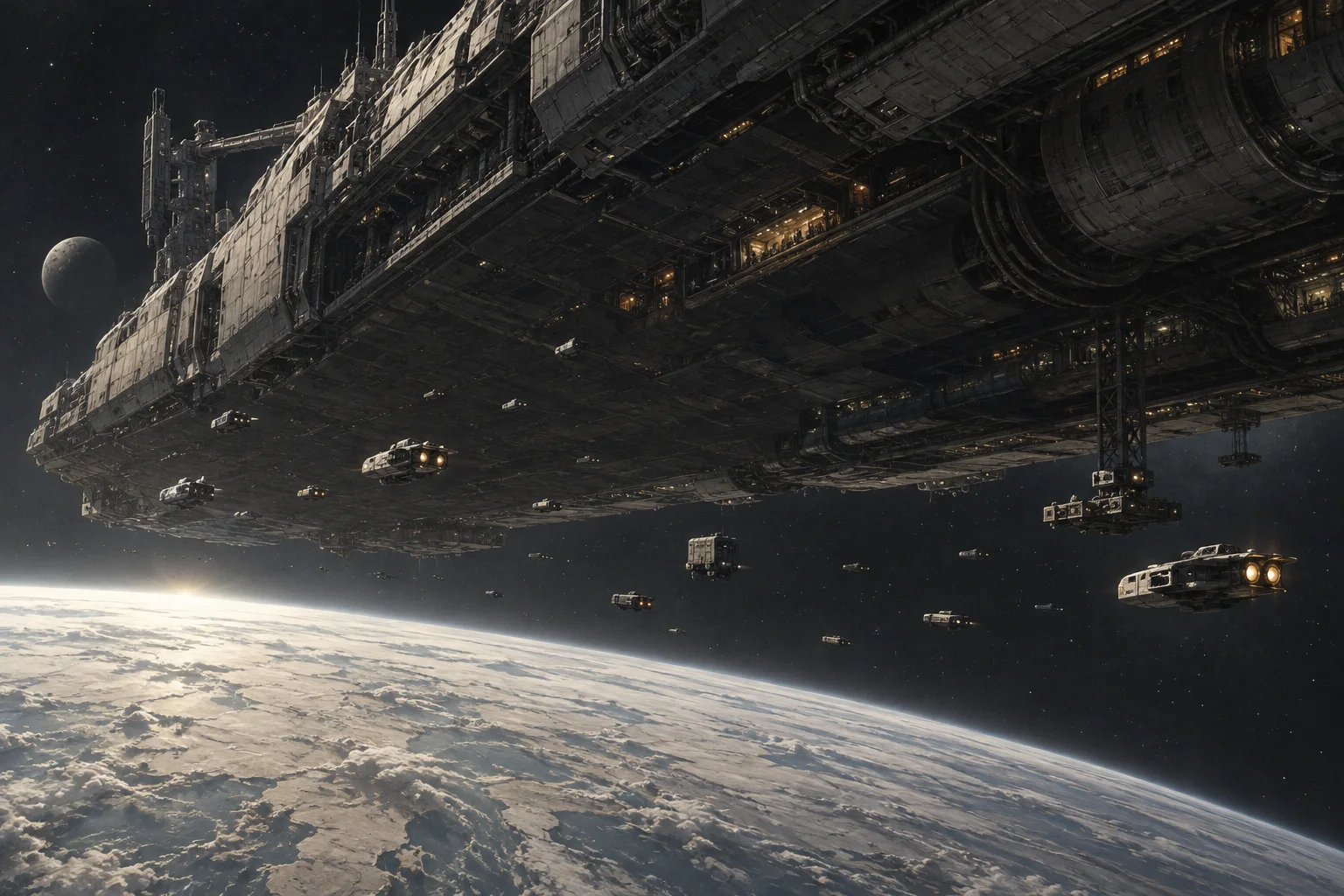
A Kurzgesagt video about the Barrow scale ↗ got me thinking about the other direction. What if a civilization spent those years getting better at working with very small things? Repairing cells, making materials, eventually arranging matter in ways we can only attempt under laboratory conditions. There could be a lot happening on a planet that looks unremarkable from space.
I get stuck on the machinery. Even if the inhabitants become very small, something has to supply their energy and materials. How much equipment would be outside the little world in the picture?
Two ways of asking how far they've got
The Kardashev scale measures the energy a civilization can use. In its familiar form, the landmarks are planetary, stellar and galactic power. Kardashev was thinking about communication with extraterrestrial civilizations. Conquering the neighbours isn't part of the definition. The 1964 paper ↗
John D. Barrow asked how small a thing a civilization could manipulate. His sequence goes from objects our own size down through genes, molecules and atoms, then nuclei and elementary particles. At the far, speculative end is control of spacetime itself. Impossibility, chapter 5 ↗
These don't have to be rival futures. A society that can manufacture things atom by atom might need a vast power supply to do it. The inhabitants could occupy a small space while their equipment spreads far beyond them.
How much energy
can it use?
Planetary, stellar, galactic scales.
How finely can
it control matter?
From everyday objects toward smaller structures.
A civilization could develop along both dimensions.
We can move individual atoms and still struggle to repair damaged organs. Knowing how to do something to one carefully prepared sample leaves many other things we don't know how to do. A single level on a scale hides that unevenness.
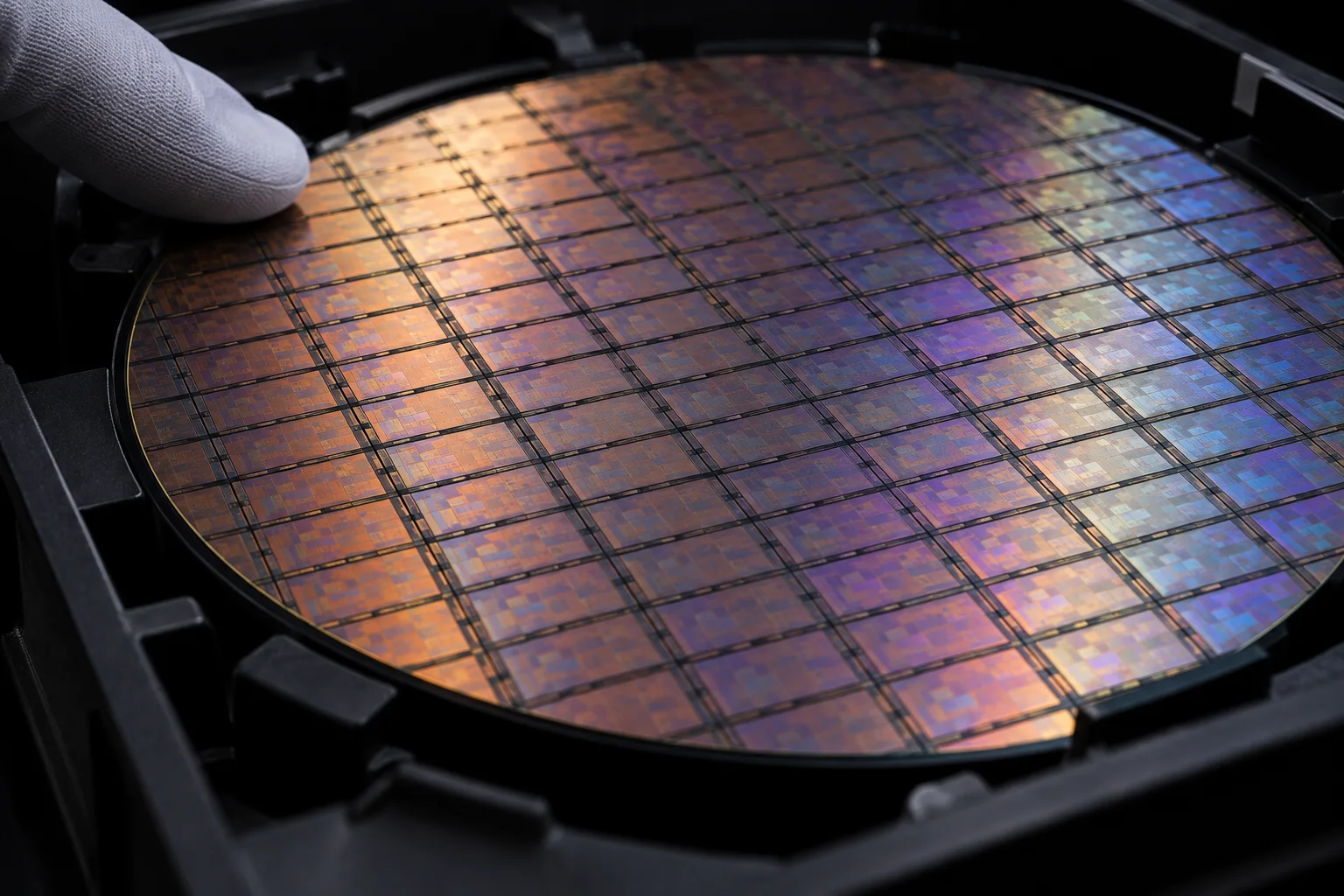
A manufactured surface
A regular array is the visible result of many tightly controlled processes.
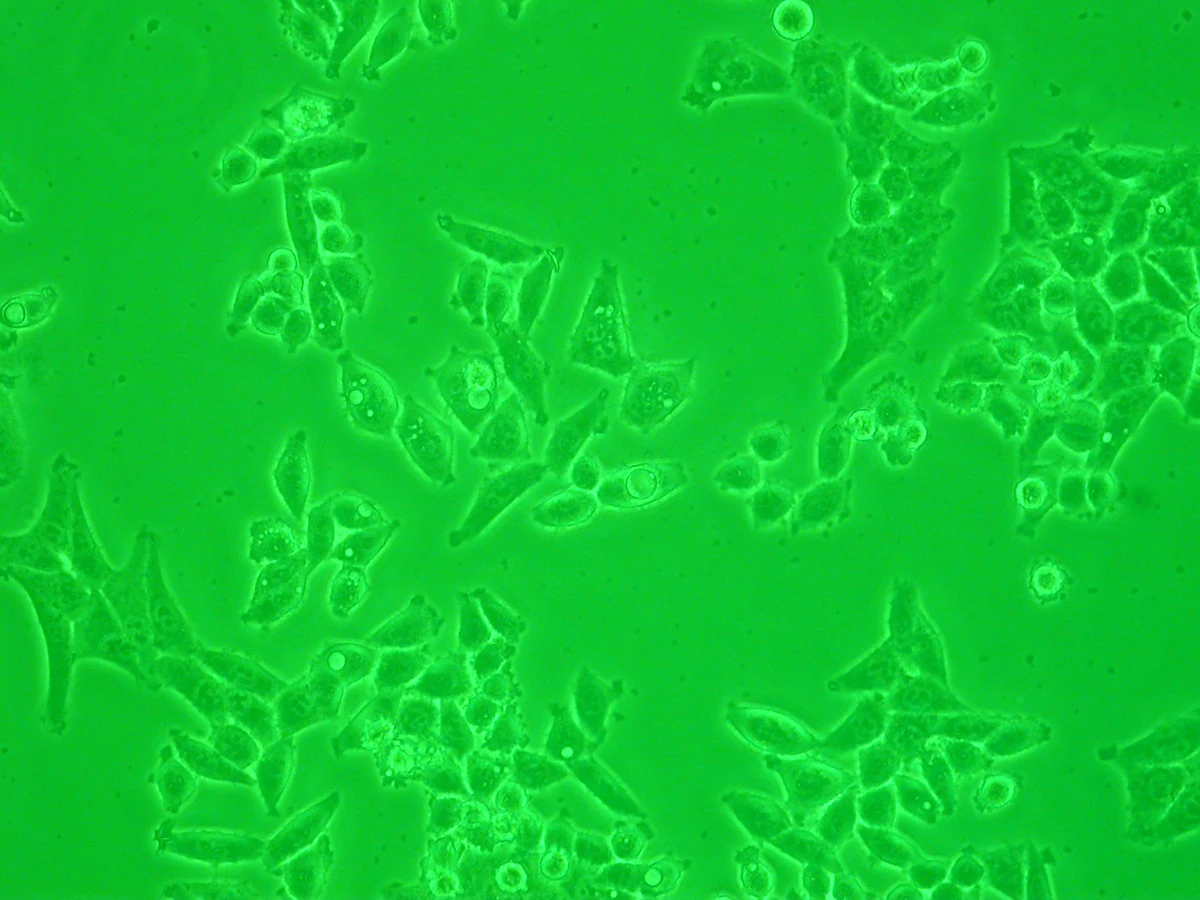
Cells in culture
HeLa cells, imaged with phase contrast and a green filter.
Y tambe · CC BY-SA 3.0. Converted to WebP; full frame retained.


A particular atom
The ability to position one target under carefully prepared conditions.
Thirty-five atoms, and everything around them
In 1989, IBM researchers arranged thirty-five xenon atoms to spell out the company's initials. I like that the result of such a difficult experiment was a company logo. IBM's account ↗
But look at what the experiment needed: a scanning tunnelling microscope, a vacuum, temperatures close to absolute zero. Those atoms weren't sitting on a desk. The laboratory is part of the achievement, even if it tends to get left out of the picture.
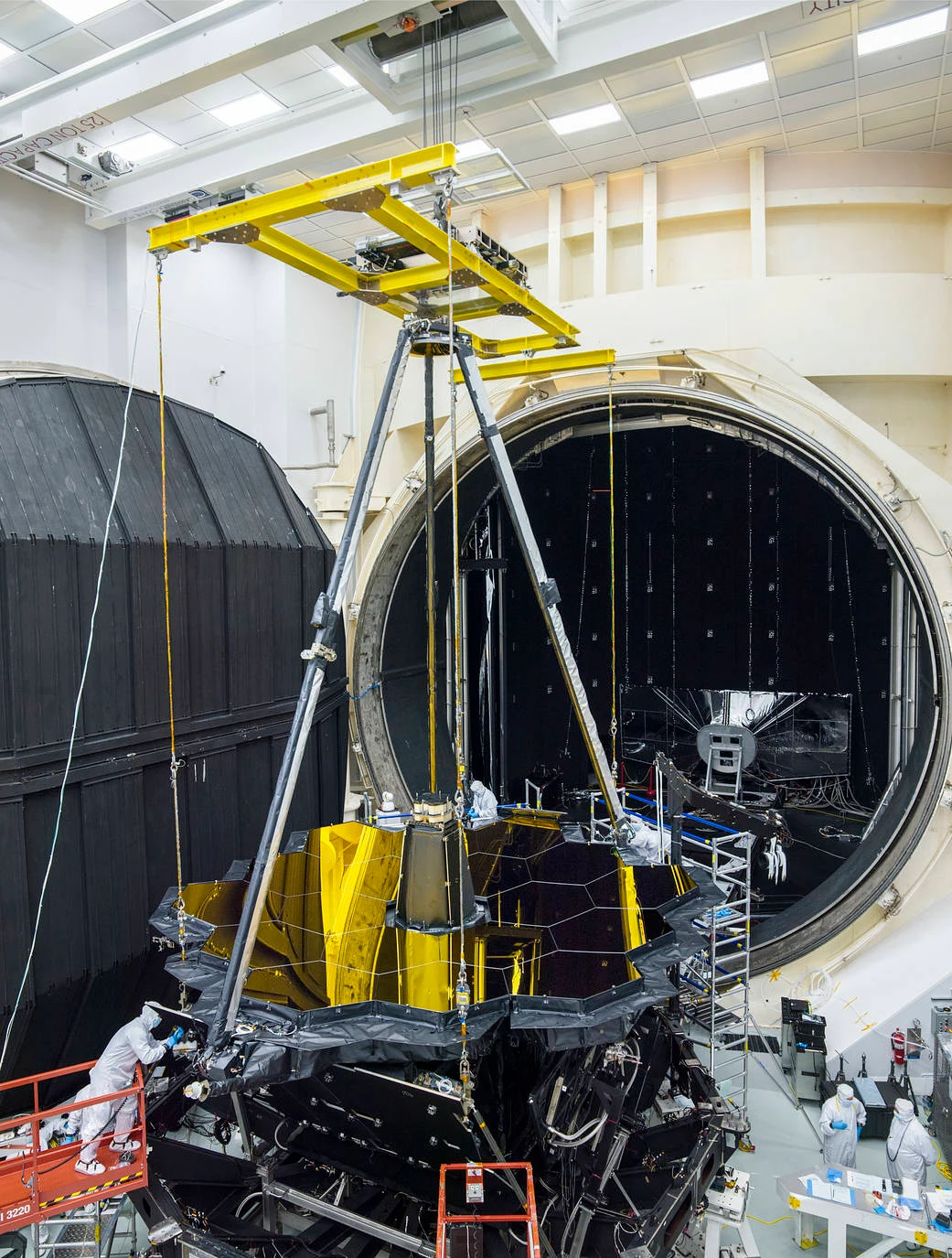
First, make the environment.
A different experiment, the same need to control the surroundings: Webb entering NASA’s Chamber A for thermal-vacuum testing in 2017. The chamber surrounds the instrument with conditions it will face in space.
Now try to turn that experiment into a factory. It has to repeat the operation, deal with errors, find broken components and replace them. Materials have to arrive. Heat has to leave. You might be able to place an atom exactly where you want it and still be a long way from making anything useful at a reasonable speed.
I'd be happy with much less than a universal machine that can make anything. Repairing a damaged part without taking the whole thing apart would be a substantial change on its own.
- Demonstrate
Move an atom.
One operation under prepared conditions.
- Manufacture
Repeat it reliably.
Manage throughput, errors, supply and heat.
- Generalise
Build what you intend.
Many materials and environments. Far beyond a single demonstration.
Success at the first step doesn't establish the next two.
Recycling has similar limits. Take an old phone apart and you have to separate its materials and replace what you lose. If the next thing you want to build needs an element the phone doesn't contain, chemical rearrangement won't supply it. Nuclear transformations are another matter, with another set of costs.
Energy, replacement material and working equipment
Old object
A mixture of materials.
Separate
Identify, sort and purify.
Feedstock
Recover usable ingredients.
Make again
Build and check the result.
Heat leaves the process. Losses and unusable material need handling.
The video goes on to bodies rebuilt at will and the engineering of spacetime. There are some missing steps here. We can edit genes without understanding nearly enough about an organism to make it immortal. “Control of spacetime” is even harder to turn into an experiment.
A world worth staying in
Greg Egan's Diaspora ↗ goes well beyond fine manufacturing. Its software minds live in computational communities called polises. We don't know whether uploading a person is possible, or what would survive the transfer. The novel lets us assume it for a while.
Then ask what would make one of these inhabitants want to leave. Their world could offer experiences for which a human body has no senses. Another planet might be interesting, but so might whatever they were already doing at home. I like that Egan gives us lives we can't easily reduce to a human city with better gadgets.

Of course, the novel is called Diaspora. A cosmic catastrophe helps set its outward journey in motion. The computers are still somewhere, and that somewhere can be damaged.
I wouldn't expect everyone to make the same choice anyway. There could be people exploring distant systems while their neighbours spend centuries working on something that fits inside a room.
Staying close has at least one practical advantage. Light takes about 3.3 nanoseconds to cross a metre in vacuum, and 3.3 seconds to cross a million kilometres. A reply takes just as long to come back. If your machines keep waiting for each other's answers, spreading them out gets expensive in time. The speed-of-light limit ↗
Even a perfect message
has to get there.
Across a compact machine.
Between distant facilities.
Across a dispersed habitat.
A reply doubles the travel time. Processing adds more.
The machines around the mind
Suppose these inhabitants do live in a compact computer. Their simulated world has mountains, weather, whatever else they have chosen to put there. Outside it, collectors catch starlight and a cooling system loses heat to space. Someone has to maintain the equipment.
The inhabitants might never leave home. Keeping home running could occupy a solar system.
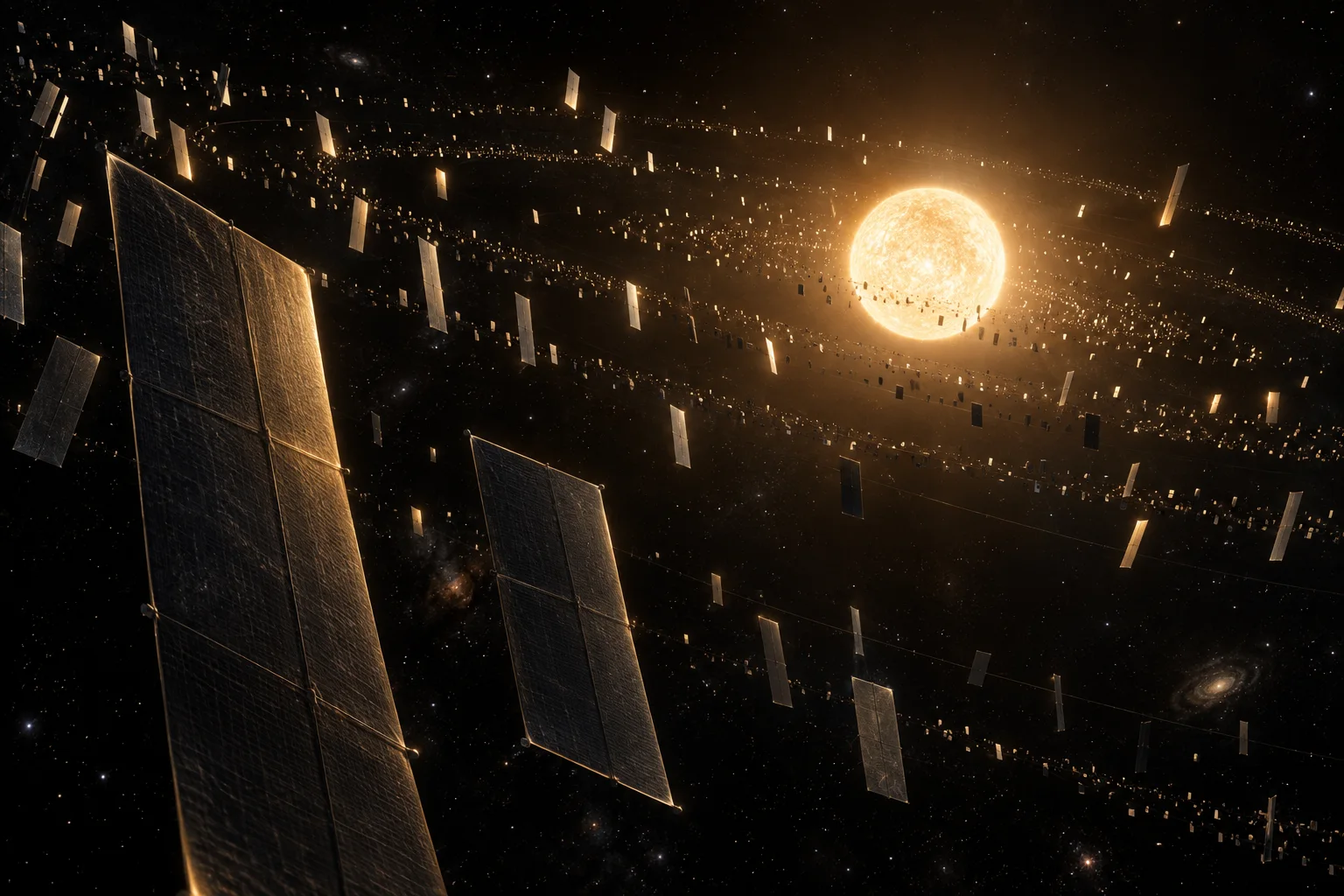
Catch the starlight.
Power arrives from outside the inhabited world.
computer
Live here.
An imagined world runs on this small part of the system.
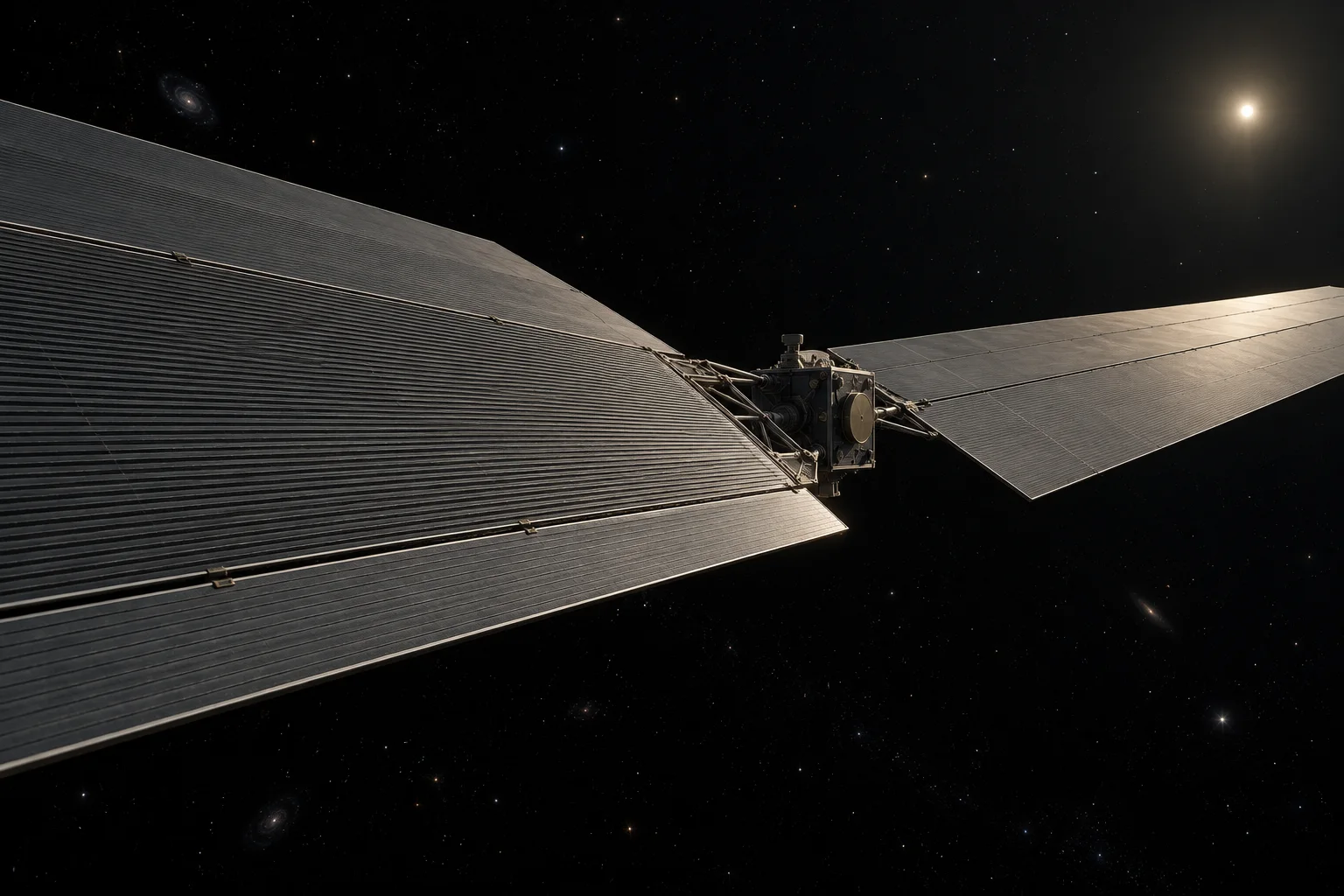
Lose the heat.
Emitting surfaces could extend far beyond the processor.
Through a telescope, we might see a huge construction project. We wouldn't know whether it powered expeditions or people who had no interest in going anywhere.
Even the cooling equipment can be surprisingly large. Take one megawatt of waste heat and an ideal radiator facing cold space. At 300 kelvin, roughly room temperature, it needs about 2,177 square metres of emitting surface. Lower the temperature by half and it needs sixteen times as much area. You can try it below. Thermal control reference ↗
Cooler needs more area.
An ideal blackbody radiator facing cold space: ε = 1, negligible incoming heat, fixed Pheat = 1 MW. A is total emitting area, not the footprint.
Change the temperature. The heat load stays the same.
A compact processor could have a very large cooling system.
The calculation and infrared spectrum
At a fixed temperature, each square metre radiates the same power. Divide the heat load by that power per unit area to find the emitting surface required.
Infrared, beyond visible light.
Visible light occupies the short band at the left. Logarithmic wavelength scale; marker shows the peak, not the full spectrum.
T is the radiator’s temperature in kelvin. ε is emissivity; σ ≈ 5.6704 × 10⁻⁸ W m⁻² K⁻⁴. We neglect radiation arriving from the surroundings and assume every emitting surface has a clear view of cold space. Real geometry, sunlight, materials and refrigeration change the engineering problem. The example does not predict the power use of an alien mind.
The wavelength relation is Wien’s law for the peak of a blackbody spectrum expressed per unit wavelength. Lower temperature shifts this peak toward longer wavelengths. Radiation laws reference ↗
So there are competing demands. Keep the machines close and they can communicate quickly. Give the radiator more room and you have to move heat out to it. Using less power would help. Perhaps a world could run more slowly, though events outside would carry on at their usual pace. I'd want to know what that trade would feel like to someone living there.
A closer lookWhy geometry and erasure matter
Two limits are easy to conflate. Packing the same heat production into a smaller cube reduces the surface available to lose it. Building a larger cube at the same heat production per unit volume also creates a problem: volume grows faster than surface area. The drawing below shows the second case.
Side length L
Volume L³
Surface area 6L²
Side length 2L
Volume 8L³
Surface area 24L²
Double the length.
Halve the surface available per unit volume.
What does one erased bit cost?
In the standard setting, resetting one initially unknown, equally likely bit to a fixed value has a minimum average heat cost. Bérut and colleagues tested this limit using a tiny trapped particle as a one-bit memory.
kB is Boltzmann’s constant.
This is a bound on irreversible erasure, not the energy cost of every computation. Lowering the computer’s operating temperature lowers this bound. The radiator may operate at a different temperature; refrigeration consumes power and adds heat that must also be rejected. Bérut et al., 2012 ↗
Somebody might leave
There's an objection I can't get around. Most societies could be happy where they are, and one could still send out machines that establish settlements. If those settlements send out more machines, the process could keep going without most intelligent life ever choosing to travel.
This is why I don't think “they stayed home” settles the Fermi paradox. Giving people a reason to stay isn't enough. You'd have to explain why the ones who leave don't spread, or why we haven't encountered them.
The chain could break. Settlements fail. A destination might be unsuitable. Carroll-Nellenback and colleagues explored this in their settlement models: some conditions allow widespread settlement, while others leave suitable systems unoccupied in an inhabited galaxy. How long settlements last matters. The Aurora Effect ↗
I can imagine an inhabited galaxy in which the travellers are the people we're most likely to meet. That wouldn't tell us much about everyone they left behind.
Would we recognise the inhabitants?
In Stanisław Lem's Solaris ↗, the alien intelligence is an ocean. The humans spend a great deal of effort studying it and still have enormous trouble making contact. It isn't an example of a tiny civilization. It makes me wonder whether we'd recognise what was in front of us even after arriving.
There is no obvious place to meet the government. You can't assume that what the ocean does divides into work, conversation and thought. What would count as it answering you?

From here, we have to begin with things our instruments can detect. A radio signal, for example, or the waste heat from a civilization using a substantial amount of starlight. Project Hephaistos has used infrared observations to put limits on some possible Dyson-sphere populations. Those limits depend on how much starlight the structures intercept, their temperature and the reach of the observations. Project Hephaistos I ↗
Small inhabitants with an enormous energy bill could still be conspicuous. A society that uses much less energy would be a different search problem.
A civilization intercepts starlight
and radiates waste heat at a given temperature.
Extra infrared emission
Check natural explanations, including dust.
Constrain that model within the search’s sensitivity.
Neither result, by itself, tells us who lives there.
What would they do with another million years?
I'm curious about a society that spends a few centuries repairing its own planet. How much would it need to understand about the life already there? Would its inhabitants agree on what counts as repaired? It's easy to grant them wonderful machines and skip over what they would use them for.

I'd like to see more science fiction willing to linger on such a place. Let the visiting ship arrive. Let its instruments find breathable air, ordinary temperatures, no orbital traffic. Then have someone on board notice a patch of ground rearranging itself between observations.
The ship has crossed a thousand light-years. It might need to stop and look more closely.