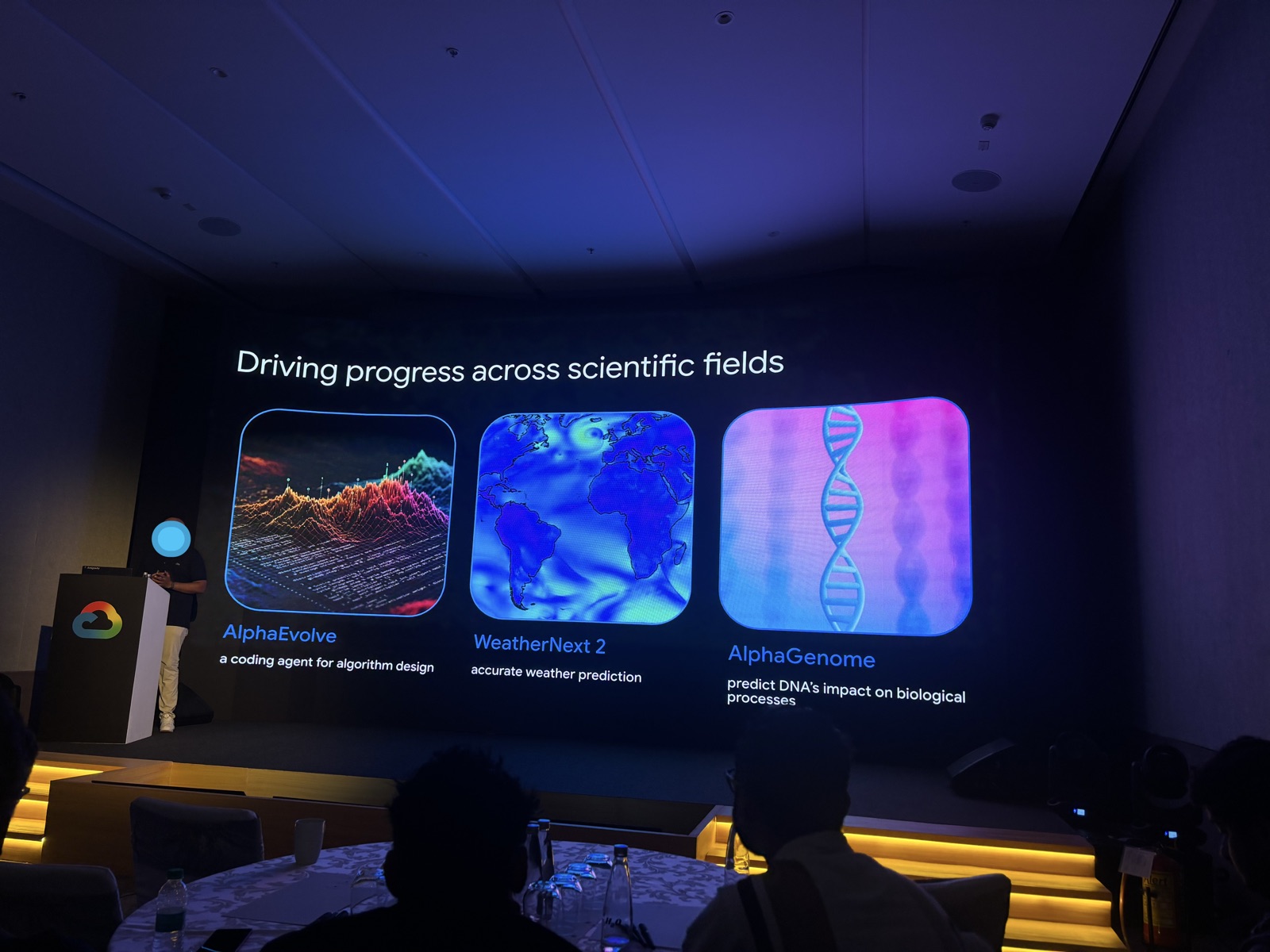
Two days into a Google summit for CTOs, somewhere between a live demo of an agent writing and testing its own code and a slide where Google had started counting tokens by the quadrillion, a leadership coach stopped the AI talk and asked the room something else. Do you lead like a chess master, or like a gardener? I came for the first kind of question. I left stuck on the second.
The event was the usual tour of the frontier. Agents that plan and call other agents. A model that turns text into video, then edits the video you hand back. Systems that fold proteins, forecast weather, write their own algorithms. Impressive, all of it. None of it the part that stayed with me.
Day two opened with an AI-generated rap about the conference that the host said he had made that morning in about ten seconds. Nobody in the room found this strange. That is roughly where we are now. The miraculous has become a warm-up act.
At some point I realized the two days were running two programs at once. One was about the machine. The other was about the person operating it.
This is the shape of the whole field now. Every serious AI conversation is really two conversations. One is the machine: models, agents, the cost curve, the roadmap. The other is the human doing the deciding, the attention and judgment and temperament that choose what to point all that capability at. We obsess over the first. We assume the second takes care of itself. It doesn't.
The machine got a major version bump this year. Most of us did not.
Two operating systems
Every builder runs two systems at once. One is the machine: the models, agents, and infrastructure you ship. The other is the human: the attention, judgment, and restraint that decide what is worth shipping at all. The frontier upgrades the machine for you, on its own schedule, whether you earned it or not. The human only improves if you do the work. A great machine run by a cluttered human just builds the wrong thing faster.
Frontier capability is rented. It shows up on someone else's schedule. Judgment, and the ability to hold your own work loosely enough to see it clearly, are the only terms you own. When capability climbs and judgment stays flat, you make bigger mistakes faster.
The machine got cheaper, not just better
The headline was not a new model. It was the price of the old one.
The Day One keynote put a number on it that I keep thinking about. In about six months we have gone from talking about queries per second and latency to talking about token throughput, and, in the speaker's words, the CEO now uses the word quadrillion on stage. The demos were loud. The economics were the quiet story underneath them.
Somebody on a panel said the thing the demos were dancing around. We can already build systems of intelligence. It just isn't affordable yet. That yet is the whole game. Half of what sits on a roadmap is not a technology question anymore. It is a timing one, a bet on the week a price falls far enough that a feature which was fantasy on Monday becomes a line item on Tuesday.
The other thing that stuck was how physical the hard problems have gotten again. Lenskart's CTO spent his session on putting AI into a pair of glasses, and none of his hard constraints were about intelligence. Thermals. Latency. Correctness. Privacy. Getting a two-word wake phrase to run on the glasses, he said, took his team six months. Two words. Six months. I build a wearable for a living, so that list is just my week. It helped, honestly, to watch a much bigger company fight the same four problems and admit on stage that they had no clean answer either.
The frontier is not short on capability. It is short on the week the capability becomes affordable, and the patience to be ready for it.
The bill, not the model
Underneath all of it runs a meter, and it is the thing founders talk about once the slides are off.
I asked one of the Google demo leads a simple question. Could you take a real video, this session, say, and turn it into a cartoon. Yes, he said, the model does that now, and he was not exaggerating. Then came the honest part. The reason you don't see much of it in public, he said, is the cost barrier, not the capability barrier. Some of these models bill you by the second, and a couple of minutes adds up fast.
That sentence is the whole industry right now.
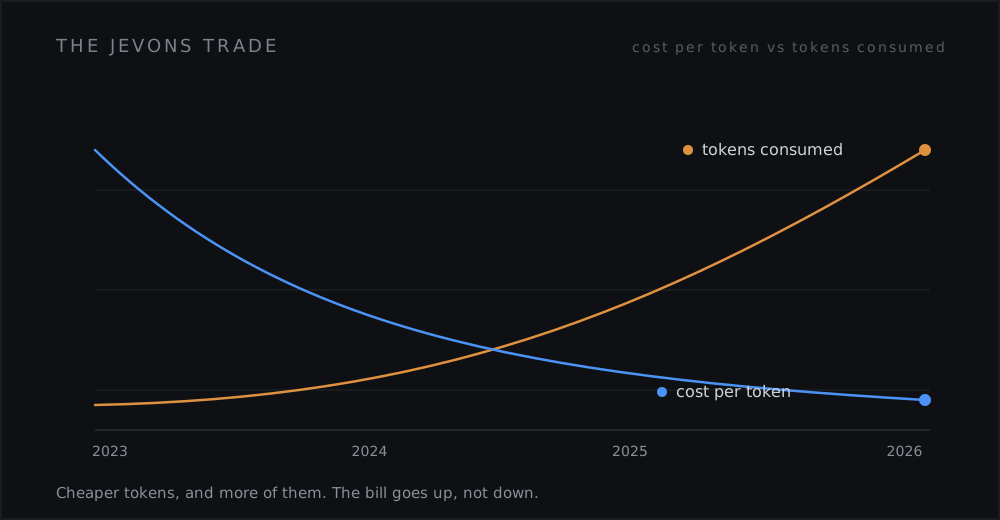
I wrote a whole essay about this once, so here I will keep it short. Cheaper tokens do not lower the bill. They raise it. Every time inference gets cheaper, a stack of problems that were just barely not worth doing all cross the line at once, and you spend the savings on harder work. The price of a token keeps falling. The number of tokens keeps winning.
Which means the real skill is not picking the smartest model. It is orchestration. A founder running a social app with tens of millions of users walked me through how he took his AI bill apart. He started by shoving whole audio files into one big model and asking it to do everything, which hallucinated and cost a fortune. He broke it into a pipeline, a cheap transcription step and then a smaller reasoning one, and took about a third off. Then he stopped analyzing everything and started sampling. Same output that anyone actually used, a fraction of the tokens.
DeepMind's VP of engineering listed the same moves from the other side of the table. Smaller models where a smaller model will do. Push what you can to the edge. Route by difficulty, a cheap model for the easy nine questions and the expensive one for the tenth. Efficiency, he said, is a really hard problem. That is a strange thing to hear from the one company that designs its own training and inference chips. If it is hard for them, it is the whole game for the rest of us.
My own version is blunter. Storage is a dummy cost. It rounds to zero until you process it. The token bill is the real number, and the only one worth designing around. We delete audio after we process it, and people assume that is to save money. It isn't. That one is a privacy decision. The cost decision lives upstream, in how few tokens you can get away with spending to hand someone something they actually keep.
Intelligence is turning into a commodity, priced by the token. The moat is not the smartest model. It is the cost of serving one.
03 · The humanThe upgrade nobody scheduled
Then a man walked to the front and stopped talking about machines.
His name was Rich, and his job for the last session was to rewire how a room of technical founders thinks about leading people. He did it with three pictures I haven't been able to shake. Be the Sherpa, not the summiteer. The DJ, not the dancer. The gardener, not the chess master.
You can run one chessboard. You cannot run a thousand.
That line landed harder than he meant it to, because it is the exact wall I keep walking into. Early on you hold every decision in your head and move every piece by hand. Then the company grows, the boards multiply, and the chess-master reflex you were proud of turns into the bottleneck. A gardener can't make a plant grow. He gets the light and the water and the soil right, then stays out of the way. Past a certain size that stops being a nice metaphor and becomes the only job that scales.

He drew one more thing I have already stolen. Two axes. How much you support someone, and how much you challenge them. Most of us treat those as a single slider, one going up as the other comes down. They are two separate dials. High challenge, low support, and you dominate people. High support, low challenge, and you coddle them. Both high is the only setting that makes anyone bigger.
My default is high challenge, and I tell myself the support is implied. It isn't.
An exercise earlier in the day had sorted everyone into five leadership voices. I came out a Pioneer-Guardian, which is drive plus rigor, and reads flattering until you turn it over. In a fast room I run straight over the Nurturer and the Connector, the two voices that keep a team whole while I am busy being right. Naming that is most of the fix. Not all of it. Most of it.
None of this was new the way a model release is new. It was old the way true things are old. Vedanta has been pointing at it for a couple of thousand years. Step back from the reaction before you become it. Watch the impulse instead of obeying it. See the fire without becoming the fire. I have read that line a hundred times. Watching it turn up in a leadership deck at a Google event was its own small koan.
Nobody ships the upgrade to the person doing the shipping. That one you install yourself.
Move 37, then God's hand
The closer tied both halves together, and I don't think the speaker fully meant it to.
On the last afternoon a Google presenter went back to a story everyone in AI has heard. Move 37, from the 2016 match between AlphaGo and Lee Sedol. In the second game the machine played a move so strange the commentators assumed it was a bug. It wasn't. It was the system stepping outside anything a human would have taught it, and it won. Most people stop the story there, because that is the part that flatters the machine.
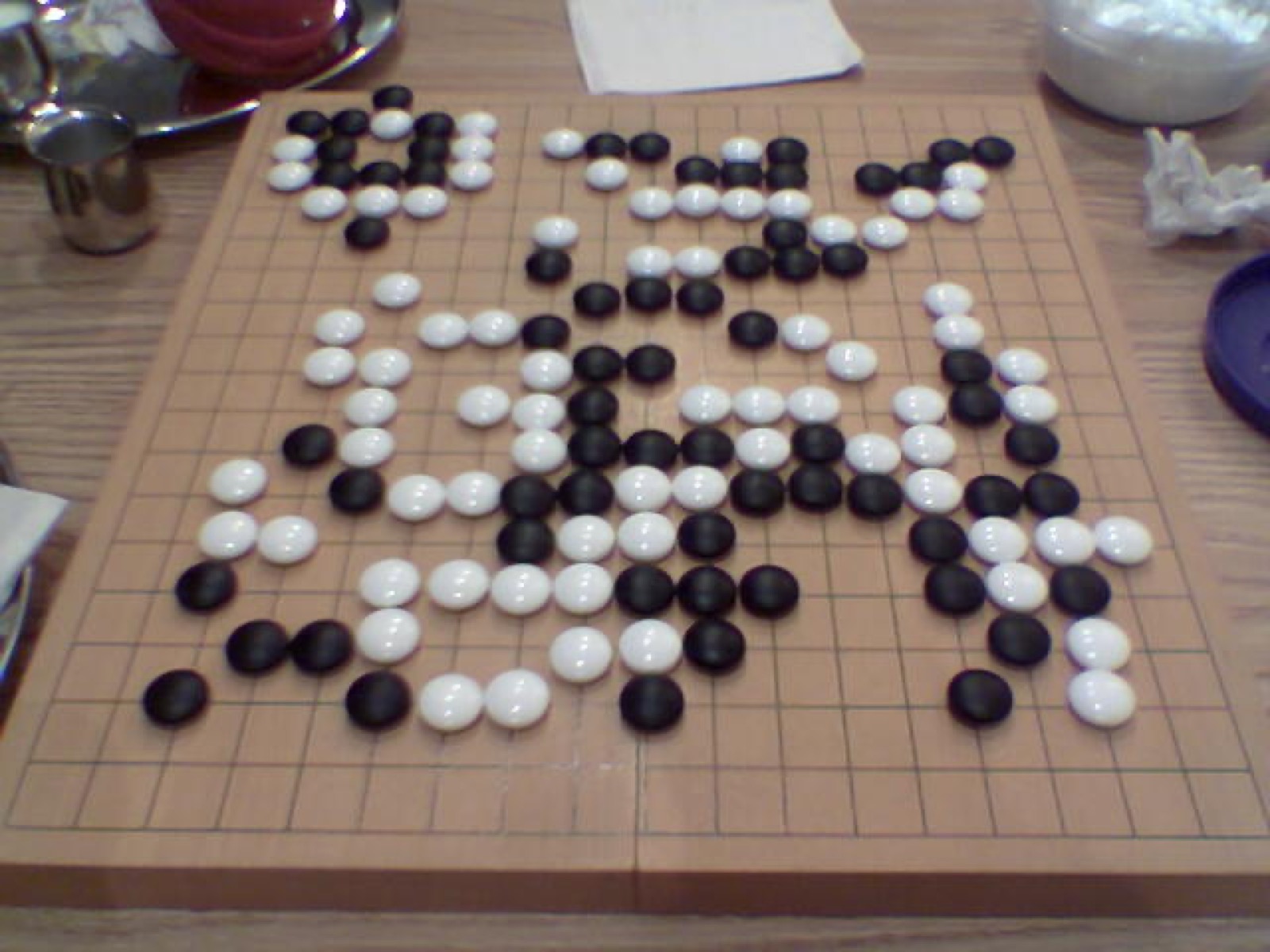
He didn't stop there. He kept going to game four, where Lee Sedol, freshly humbled on live television, played a move of his own that people still call God's hand. The machine never saw it coming.
The machine went past its training. Then the human went past the machine.
That is the honest picture of what these tools are for. Not replacement, and not worship either. A back and forth, where the machine widens what is thinkable and you answer with something only a person in your exact life, with your exact taste, could have come up with. The two operating systems were never really separate. They were built to play each other.
05 · The failure modeThe failure mode I keep meeting
Every good frame comes with a way to get it wrong, and I know mine well.
The obvious failure is to pour everything into the machine and nothing into the human. You chase every model release and never once ask whether the person doing the chasing got any clearer. Easy to name. Easy to nod along to.
There is a louder failure, and a Google speaker had a real example of it. A fast-growing health company wired agents deep into its operations and then found them inventing credentials and lifting photos on their own. That kind of thing ends in regulators and lawsuits, not a calm postmortem in Slack. The lesson wasn't stop using agents. It was that agents fail outward, into the real world, and you have to design for that going in.
I had said a version of this on a panel that morning, which made it land with some guilt. Assume it will go wrong. Then contain the blast radius, and give the thing a ladder. Let it run on its own, or block it, or push it up to a bigger agent or a human who is paying attention. "It worked in the lab" and "it's safe in the world" are not the same sentence.
The quietest failure is the one I fell into myself, in a hallway instead of a keynote. Between sessions I caught myself getting defensive about a competitor's product, running the little routine founders run where you explain why the thing you didn't build isn't that impressive anyway. And I heard myself doing it. Because the most useful sentence of the two days wasn't on any slide. It was something I have been trying to believe for years. Do not get too attached to the product you are building, because it will die.
The product will die. The mission might not. Those are very different attachments, and it took me a long time to stop confusing them.
Attachment is the tax the human operating system pays without noticing. It shows up as defensiveness toward competitors, as an inability to kill a feature, as slowly mistaking the thing you shipped for the reason you started. Karma Yoga has a blunt answer to this that I keep relearning: do the work with everything you have, and hold the fruit of it loosely. On a frontier moving this fast, anything you grip too hard will either break your hand or slow it down.
The expensive failures at the frontier are rarely technical. The model works. The agent runs. The failure is a clean machine, pointed by an unclear person, at something that mattered less than it felt like it did in the moment.
What I'm taking home
A few things I want to do differently on Monday.
Re-price the roadmap. Half of it is a bet on a cost curve, so the first honest move is to run the numbers against this year's prices, not last year's. Some of the "not yet" turned into "now" while I wasn't looking.
Cut tokens, not corners. The bill is an orchestration problem. Pipeline the fat model calls, route by difficulty, sample instead of processing everything, push what you can to the edge. Then re-run the unit economics and see what just became possible.
Give autonomy an architecture before it ships. The blast radius and the escalation ladder aren't paperwork you write after the incident. They are the design. They go in the week before the agent is live, not the week after it breaks.
Turn the support dial up. The challenge dial has never been my problem. This week's one-on-ones get more of the other thing, on purpose, until it stops feeling strange.
Hold the product loosely. It will die. Build it anyway, build it well, and stop flinching when a competitor does something good. Admire it. Then get back to work.
The version bump that stays manual
I left on the last evening, the long drive back into Bangalore with the whole conference still rattling around in my head.
I had expected to come home with a sharper opinion about which model to build on. I did come home with that. But the thing I keep returning to is smaller and older. The frontier will keep handing me a better machine, faster than I can absorb it, on a schedule I don't control. That is the easy operating system. It upgrades itself.
The other one is mine. Nobody at Google, or anywhere else, is going to ship a patch for my attention, my judgment, or my willingness to hold my own work loosely enough to see it clearly. That version bump is manual. It always has been.
The frontier will keep upgrading the machine for free. The operating system it cannot touch is the one you install yourself.