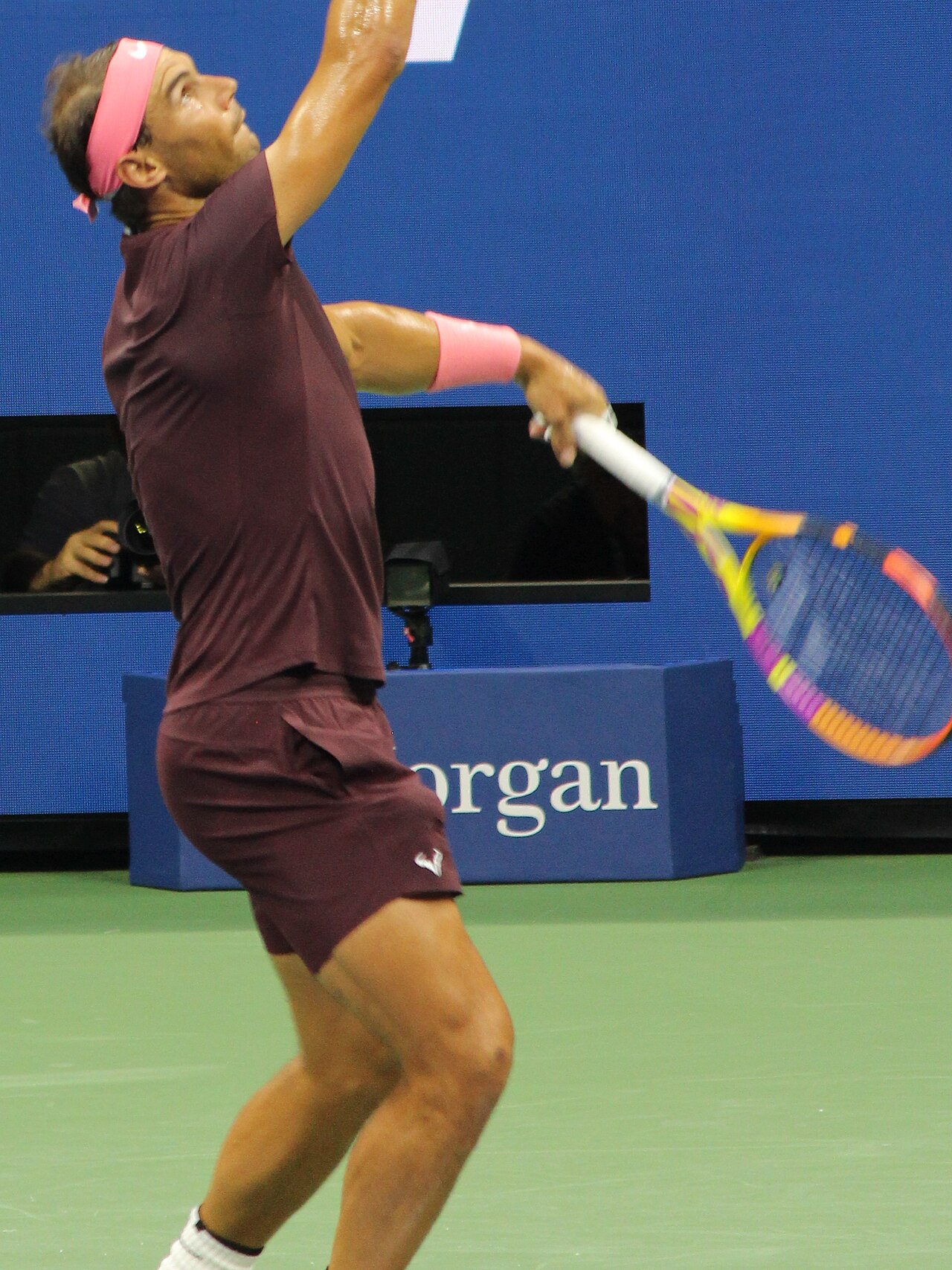
I was watching RAFA, the Netflix documentary series on Rafael Nadal, and caught myself doing the slightly shameless founder thing: turning an athlete's life into a private operating manual.
Let me make the humility clause explicit before the internet does it for me. I am not Rafael Nadal. I have won exactly zero Roland-Garros titles. My forehand is not terrorizing anyone. Most days I am trying to get software, hardware, people, money, and my own mind to cooperate inside the same twenty-four hours.
Still, something in the series hit a very familiar nerve.
Not the greatness. The relentlessness. The way a serious life can narrow around one object until everything else starts arranging itself around that object. The body. The calendar. The rituals. The people close to you. The quiet negotiations you make with pain, boredom, fear, and repetition.
That part is recognizable to anyone building something hard. Not because a startup is tennis. A startup is much less elegant and has more invoices. But the nervous system knows the shape: one target, one next action, one more rep, and then another one after the romance has left the room.
The relief of one thing
There is a kind of freedom that comes from having only one thing to do.
Not one task. Not one calendar block. One real object of attention. A company. A craft. A match. A problem that follows you home because some part of you has already agreed that this is the thing.
Most people imagine freedom as optionality. More paths, more choices, more space to reinvent yourself every morning. That is one kind of freedom. It is also exhausting. Every open path asks to be negotiated. Every possible life wants a hearing.
The founder gets a stranger bargain. You trade optionality for direction. The direction starts eating the noise. A lot of daily suffering disappears because the committee in your head finally loses quorum. The answer is obvious. Build the thing. Fix the thing. Ship the thing. Survive long enough for the thing to become real.
This is not balance. It is alignment.
Watch Nadal before a point. The movement is tight, repeated, almost severe. It looks obsessive because it is. But the point is not aesthetic neatness. The point is narrowing the world until the next ball is the only universe available.
That narrowing can be a mercy. The mind stops leaking.
Relentlessness is not rage
The cheap story about people like Nadal extracts only the violence: more hours, more sacrifice, more pressure, more refusal to stop.
That reading is convenient. It lets us confuse strain with seriousness. Everyone copies the sweat. Fewer people copy the calibration.
What the series makes harder to ignore is the cost. The body is not a motivational poster. It reports back. It resists. It keeps score. Nadal's greatness is not interesting because he pretended pain did not exist. It is interesting because he kept building a game around reality as it was changing.
That is a more useful lesson for a founder than generic toughness. Toughness alone is a blunt instrument. It can push through a week while misunderstanding a year. It can win arguments and miss reality. It can keep shipping while the deeper reason for shipping has gone blurry.
Relentlessness is not the refusal to feel limits. It is the discipline of meeting limits without instantly turning them into identity.
This is where I find Nadal useful as a mirror, with the obvious caveat that a mirror is not a trophy cabinet. The thing worth copying is not the mythology of suffering. It is the precision. The willingness to return to the same hard place and ask, with less drama than the rest of us prefer, what is required now?
There are moments where the world must narrow. A launch week. A fundraising close. A production incident. A hard technical rewrite. A make-or-break customer deployment. During those phases, the founder cannot keep pretending every part of life gets equal bandwidth. That is fake balance. The company needs force.
But force is not the same as wisdom. It is only one faculty.
The founder can misuse this
The trap is not working hard. Work is often the cleanest part of the founder's life. The trap is treating every non-work signal as noise.
At first, this looks noble. You skip the unnecessary thing. You cut the indulgence. You compress the calendar. You become useful to the mission. The company starts moving faster because you have made yourself available to it at nearly every hour.
Then the same mechanism begins to overreach. Rest becomes guilt. Relationships become interruptions. Health becomes a maintenance task. Silence becomes suspicious because it does not produce a visible artifact. The founder becomes very good at moving and worse at seeing.
This is where one-pointedness mutates into blindness.
The mind that never exits execution mode eventually loses the ability to ask whether the execution still points at the right mountain. It optimizes the day until the month becomes incoherent. It calls every widening of attention a distraction because distraction is the only name it has left for anything that is not immediate.
That is not strength. That is a steering failure.
The oldest version of the trap
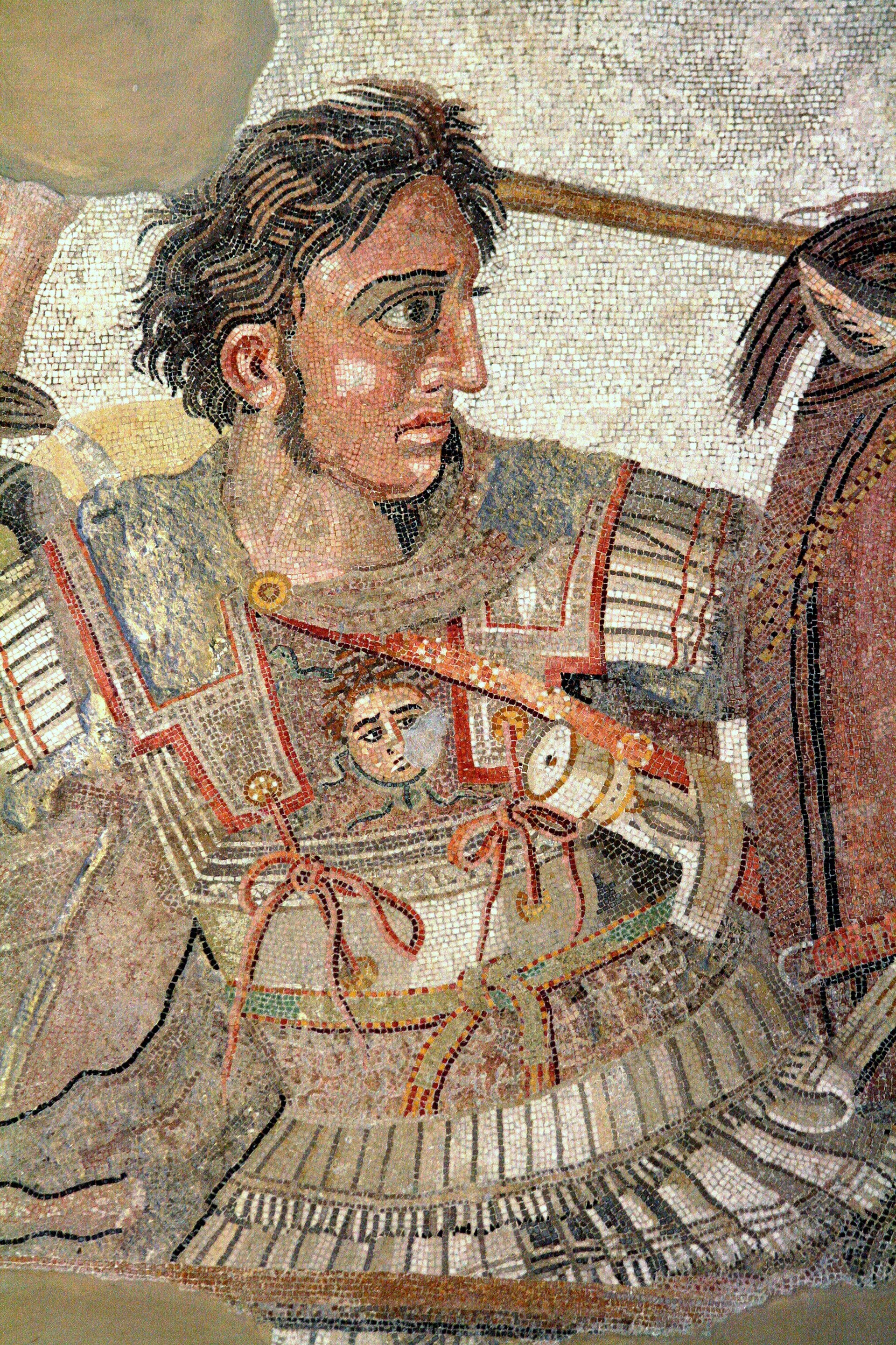
Alexander the Great belongs here as a warning, not a poster. The obvious lesson is appetite: a life aimed so intensely outward that the map itself becomes a provocation. The less obvious lesson is that conquest is a terrible model for inner life.
A horizon that keeps moving can feel like destiny from the inside and hunger from the outside.
That is the founder's danger in older clothes. The next city. The next release. The next round. The next impossible thing. Expansion can be real. It can also become a refined way to avoid asking what the expansion is for.
Rest is a sense organ
The shallow argument for rest is recovery. You rest because you are tired. You sleep so you can work again. You take a break so you do not collapse in some dramatically inconvenient place, like during a board meeting or while pretending to enjoy airport coffee.
The deeper argument is that rest restores perception.
Execution narrows the aperture. That is its job. It blocks irrelevant information so you can move. But a founder also has to notice when the irrelevant has become relevant. The market changed. The team is carrying a hidden cost. The product has become too clever. The original motivation has mixed itself with ego. The plan is still being executed, but the premise expired three weeks ago.
You do not see these things while redlining. You see them when the system gets quiet enough to report what it has been suppressing.
Rest is not leaving the path. Rest is how the path becomes visible again.
The movement is simple, but not easy. Narrow the world when the work needs all of you. Execute without constantly asking whether you feel like the person who executes. Then widen before the intensity starts calling itself truth. Return only after you can say, without bluffing, that the goal is still worth the cost.
Planning is the return to choice
Founders often dislike planning because planning can become theater. Roadmaps become decorative. OKRs become fiction. Calendars become museums of intentions nobody believed.
I sympathize. Nothing makes a builder suspicious faster than a document with too many boxes and no owner.
But the failure mode of bad planning does not make planning useless. It makes honest planning rare.
Real planning is not predicting the future. It is deciding what deserves sacrifice before the week starts demanding sacrifices from you. It is the act of asking what matters enough to receive your best attention, and what is merely loud.
Without this, one-pointedness becomes reactive. The founder is intense, but the target keeps getting selected by urgency, fear, investors, Slack, customer escalations, or the last person who spoke with confidence.
That is not one-pointedness. That is possession by the inbox.
The point of reflection is not to become a calmer person in some abstract sense. The point is to regain authorship. Choose the thing before the thing chooses you.
The company is not allowed to eat the whole sky
There are things in life that do not look urgent until they break.
Health is like that. So is friendship. So is love. So is the part of the mind that can still be moved by music, prayer, sunlight, sport, silence, and a book that has no immediate utility.
A founder can dismiss these things as softness for a while. The bill does not arrive immediately. That is what makes the debt dangerous. The compounding works even when you are too busy to check the account.
The company will always be able to use more of you. That does not mean it should get more of you. The mission deserves intensity, but it does not deserve unconscious self-erasure.
The hard part is that this cannot be solved with calendar balance advice. Early-stage building is asymmetric by nature. Some weeks are not balanced. Some months are not balanced. A founder pretending otherwise is usually lying or not building anything difficult.
The better question is not: am I balanced?
The better question is: am I still able to see?
One-pointedness without blindness
The ideal is not moderation. Moderation is often the wrong medicine for people trying to create something that did not previously exist.
The ideal is conscious asymmetry. Full force, but with periodic widening. Deep commitment, but with enough inner distance to notice when commitment has become compulsion. A life organized around one meaningful center, but not a life where every other form of meaning gets treated as a bug.
This is the delicate thing.
If you do not give yourself to the work, the work never becomes real. If you give yourself so completely that you lose the ability to reflect, the work may become real while you become less real.
So the founder's practice is not to become less intense. It is to become more awake inside the intensity.
To know when the world must narrow to the next ball.
To know when the match is over for the day.
To know that rest is not betrayal.
To return, deliberately, because the goal is still worth the life being spent on it.
The point is not to become Nadal. That would be both delusional and, in my case, bad for tennis. The point is to borrow the seriousness without borrowing the blindness.
Credits and sources
- RAFA, Netflix documentary series on Rafael Nadal, premiered globally on May 29, 2026.
- Rafael Nadal at the 2022 US Open by 350z33, Wikimedia Commons, CC BY-SA 4.0.
- Alexander the Great from the Alexander Mosaic, unknown artist, Wikimedia Commons, public domain.