
This morning I was listening to “Song for Zula” and, without deciding to, I was back in Class 12. It happened around the line about what the singer could do “if I was free.” I remembered how much sense that sentence once made to me.1
There were things in my family that made me feel restricted. Back then I believed that if I could get free of them, I could conquer the world. The violence in the lyric was never what I related to. It was the frustration. My real life would begin once the restraints were gone.
Some of that may have been true. It may also have been useful to blame somebody else for what I had not managed to do. I do not know where one explanation ends and the other begins. The annoying part is that the feeling came back immediately. The accounting arrived later.
The cue is not always outside
Play the opening of Michael Jackson's “Billie Jean.” The foot may know before the mouth does. Then the title arrives. If the song belongs to a particular part of your life, other things can follow it into the room.2
Billie
Jean
A familiar opening can reach recognition before the song's name does.
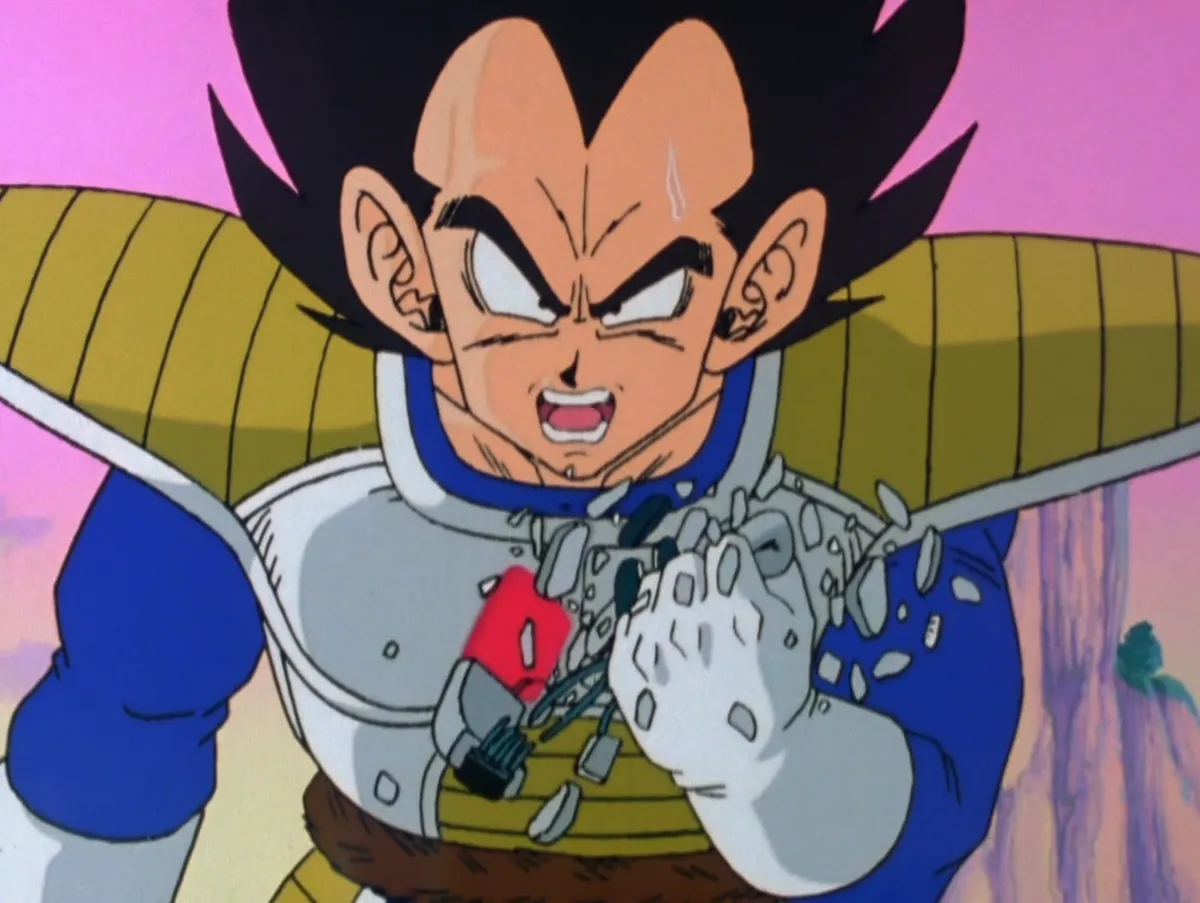
Official video ↗An old cartoon can work the same way. One frame of Vegeta, and the mind supplies a television, the room around it, perhaps a person who used to sit nearby. I do not know which of those belong to you. Pink Floyd's “Time” barely needs to begin. The clocks go off and recognition gets there before the first lyric.16
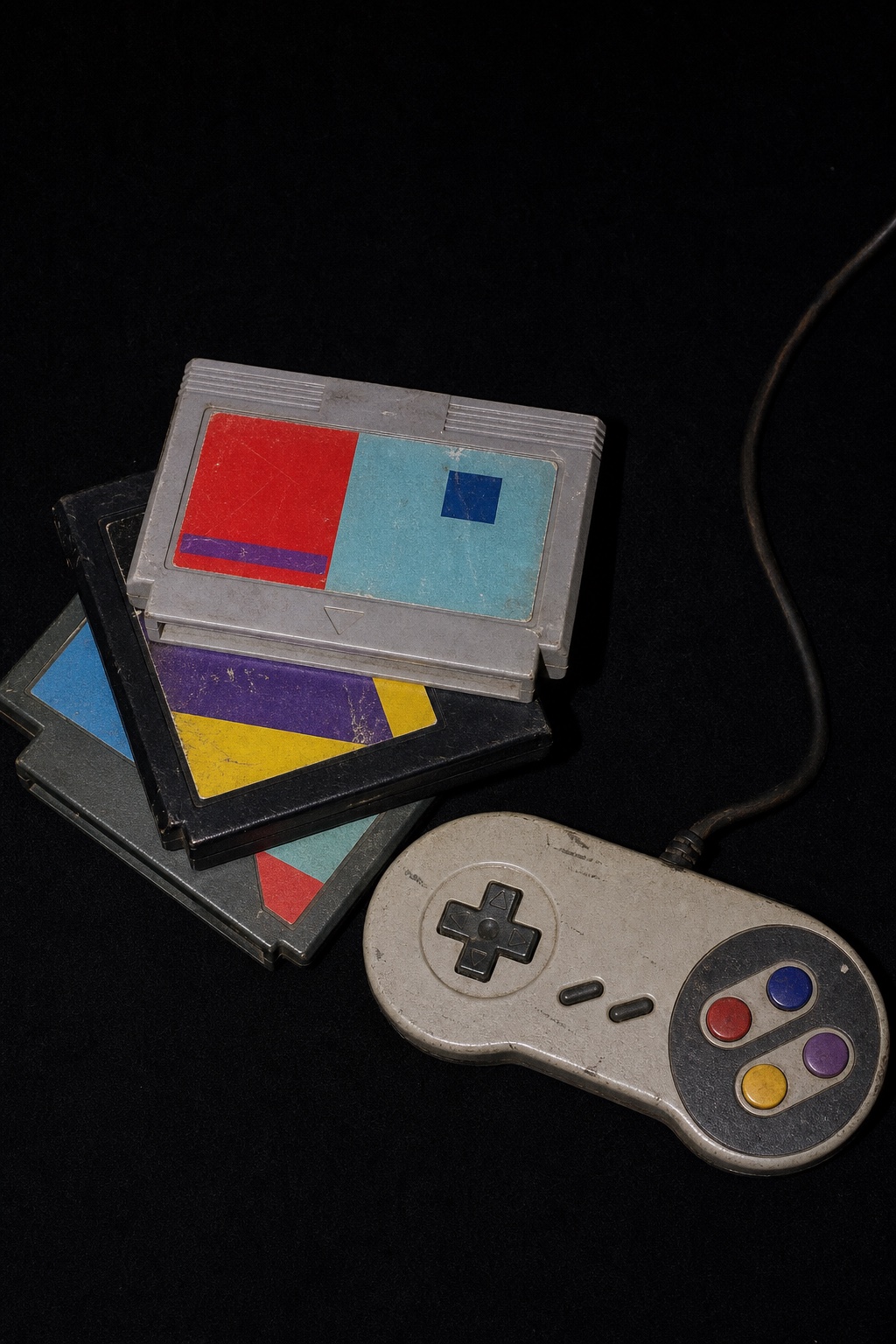
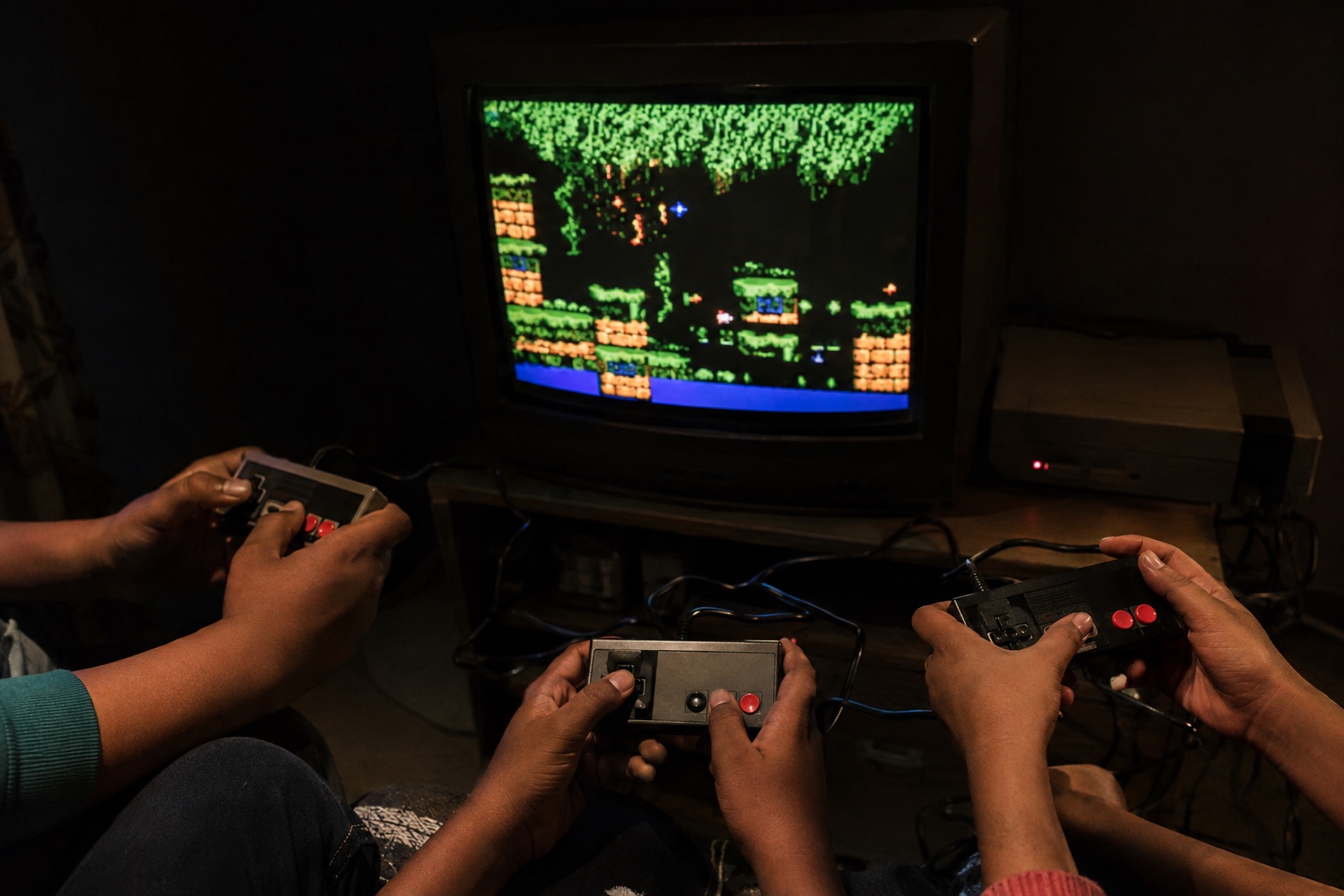
Contra is mine. Seeing the title takes me back to primary school and my colony friends. I do not remember one special afternoon. I remember us more clearly than I remember the game.

I only need to see the title.
Official promotional still / © Konami Digital Entertainment / source
Psychologists have an unlovely but useful name for this: involuntary autobiographical memory. Even an incidental word in a boring laboratory task can prompt a memory that the participant was not trying to find.3
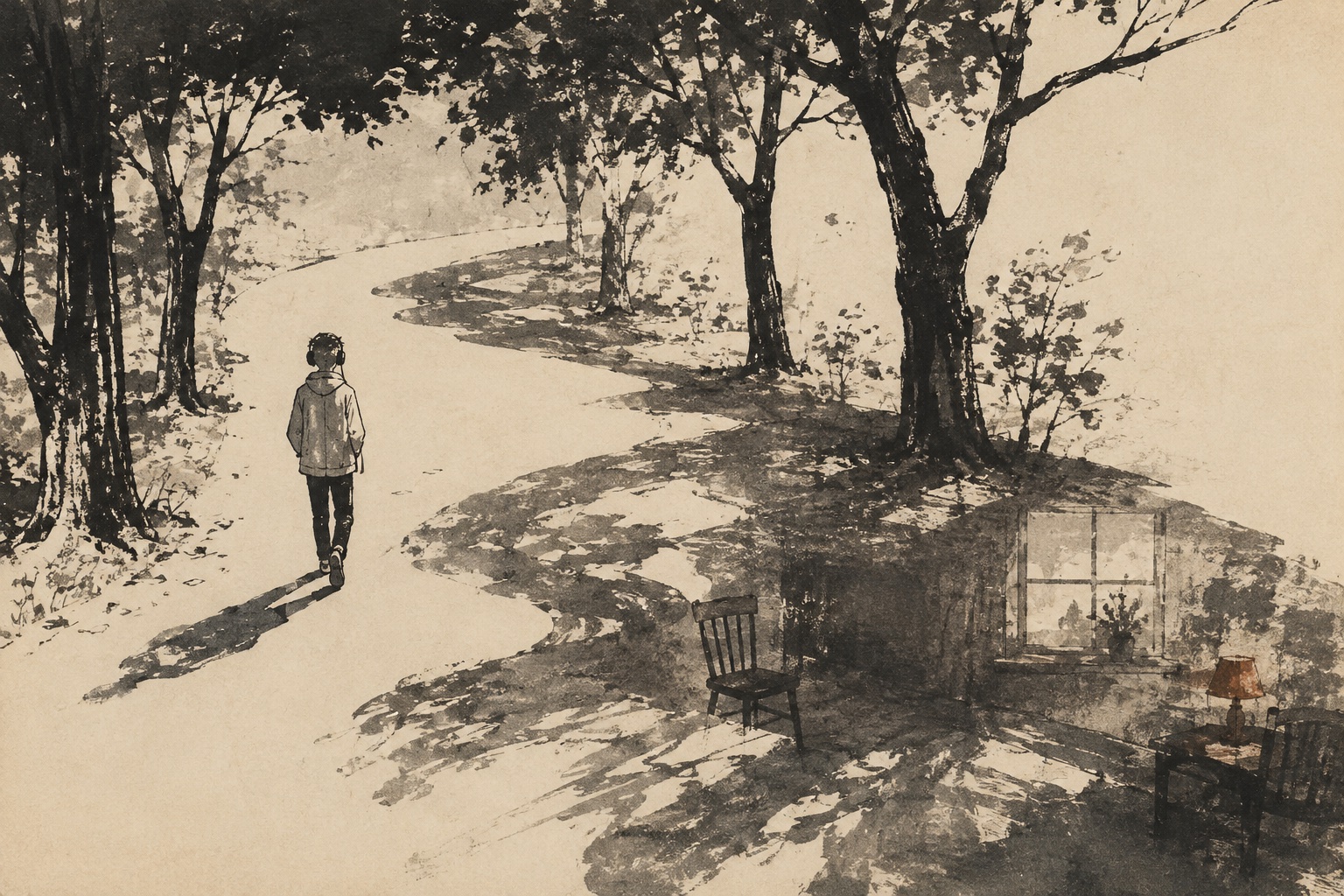
A walk offers hundreds of less controlled cues. Light on a building. Two notes escaping from a shop. The rhythm of your own steps. The cue can also be internal. One thought brushes against another, the second changes your mood, and now the mood is doing the searching.

Experiments can catch pieces of this. In one, people first selected a personal memory through a verbal label, then encountered a related smell or image. The smell produced a stronger reported sense of being brought back.4 In another, people learned events made from a person, place and object. Retrieving one association also reinstated an element they had not been asked to recall. The hippocampus was implicated in bringing the pieces together.5
- The room
- Who was there
- How it felt
The usual term is pattern completion. A surviving fragment helps reactivate the rest. Completion is a slightly flattering word for the result. What comes back may be a room with no date, a mood with no incident, or complete confidence in a detail that later turns out to be wrong.
Colony friends
or another group
without an episode
Music makes the order especially hard to untangle because it keeps changing while you listen. Brain-imaging work with familiar music has found activity related to autobiographical salience.6 That does not tell me whether the song changed my feeling, the feeling fetched Class 12, or the memory changed how I heard the next part of the song. I suspect the sequence ran in more than one direction.

The song changes while the memory arrives.
Recognition keeps unfoldingWhile writing this I kept thinking about Buddhist dependent origination. It is an account of how experience and suffering arise through conditions, not a theory of memory. What I borrowed from it was the refusal to look for one clean beginning. Given this condition, something else arises. What arises becomes a condition for the next thing.7
The song produces a feeling. The feeling brings a thought. The thought is now a trigger of its own. By the time a memory reaches awareness, “What caused that?” may have several honest answers.
At least four things can start the chain:
- something seen, heard or smelled
- a change in the body
- one thought brushing against another
- a concern that was already active, though not quite conscious
The last one is easy to miss. What is already bothering us can organise the search without announcing itself.
Silence is not empty
I know another version of this from trying to meditate. Sit still, remove most of the outside input, and the mind reveals its backlog. A memory appears. Then an unfinished problem. Then an idea that feels as if it came from nowhere.
There are different ways to meet that traffic. In focused-attention practice, you notice the thought and return to something such as the breath. In open monitoring, the thought itself is part of what gets noticed. A small 2012 study of 19 experienced practitioners found better performance on a divergent-thinking task after open-monitoring meditation than after focused attention.17
That result is interesting. It does not make meditation an idea generator. Plenty of junk turns up in silence. But sometimes the connection that would not arrive while I was pushing at a problem appears after I stop pushing. I sit down without a notebook and end up looking for one.


The body is part of the context
Some memories first announce themselves in the chest or stomach. Tightness. Warmth. The impulse to move towards something, or away. The sensation is happening now. It is not a certificate of accuracy about then.
My first rough explanation for this was “chemicals and hormones.” That is true in roughly the way that saying computers are electricity is true. The interesting question is what changes, and when. Blocking beta-adrenergic signalling in one experiment reduced the usual memory advantage of an emotionally arousing story. In another, cortisone given before a test made previously learned words harder to retrieve.8 Arousal while something is learned and hormonal state when it is recalled are separate parts of the story.
Even a heartbeat can change a particular kind of learning. In a study with 40 participants, visual cues paired with the threat of a mild shock produced different learned fear responses depending on when the cue appeared in the cardiac cycle.9 The finding is narrower than “the heart remembers.” The body is already involved in the event before we turn the event into a sentence.
The diagram is crowded because the situation is crowded. Sleep, stress, current goals, the body and the surrounding world all alter what gets noticed and what becomes easy to recall. The same song on another morning might do nothing.
A machine does not have the body that was there when I first heard “Song for Zula.” We can store emotion: frustrated. It may be a useful tag. It is not frustration.
Software can still reproduce parts of the function. It can learn associations, notice timing and track behaviour well enough to make a good guess about what matters. That may be enough for a useful product. When we say the machine “felt” frustrated, though, we have left the mechanism and started speaking metaphorically.
Storage is the easy part
A lot of machine memory can still be introduced with a small piece of pseudocode:
const context = retrieve({
  query: whatTheUserJustAsked,
  topK: 8
})
return answer(question, context)
This is a cartoon, but not an unfair one. Save past material. Search it with the current query. Put the best matches into the model's context. Retrieval-augmented generation made this pattern widely legible. MemGPT added management between a limited working context and external storage. Zep represents changing relationships over time and links them back to source episodes.10
The record could say game: Contra. That is searchable and almost useless. I care about primary school, my colony friends and playing together. The title matters because it opens into that episode.
The word memory is doing too much work in current systems. It can mean a transcript in a database, a summary about a person, an embedding used for search, a changing graph, or information absorbed into model weights.
There is no single line of progress here. A-MEM links notes and revises their descriptions when new material arrives. Hindsight separates facts, experiences and beliefs, then adds operations for recall and reflection. Titans explores memory learned into a neural system rather than only records that a person can open and edit.11
I find all three useful for different reasons. The choice also changes what a correction means. A person can edit a note. Repairing a web of derived links is harder. Removing something that has entered model weights is a different problem again.

Someone decided what deserved a card.
What entered / what was left outThe troublesome step is often the neat little summary in the middle. Suppose I had told an assistant in Class 12, “My family is holding me back.” Years later I say, “I may also have been making excuses.” The system could keep both statements and their dates. Or it could compress them into: “Aryan has a complicated relationship with freedom.”
Fluent, tidy, useless.
The summary has flattened what I felt, what I claimed had caused it, and what I now think about that claim. If future retrieval sees only the summary, repetition will make it look like a settled fact.

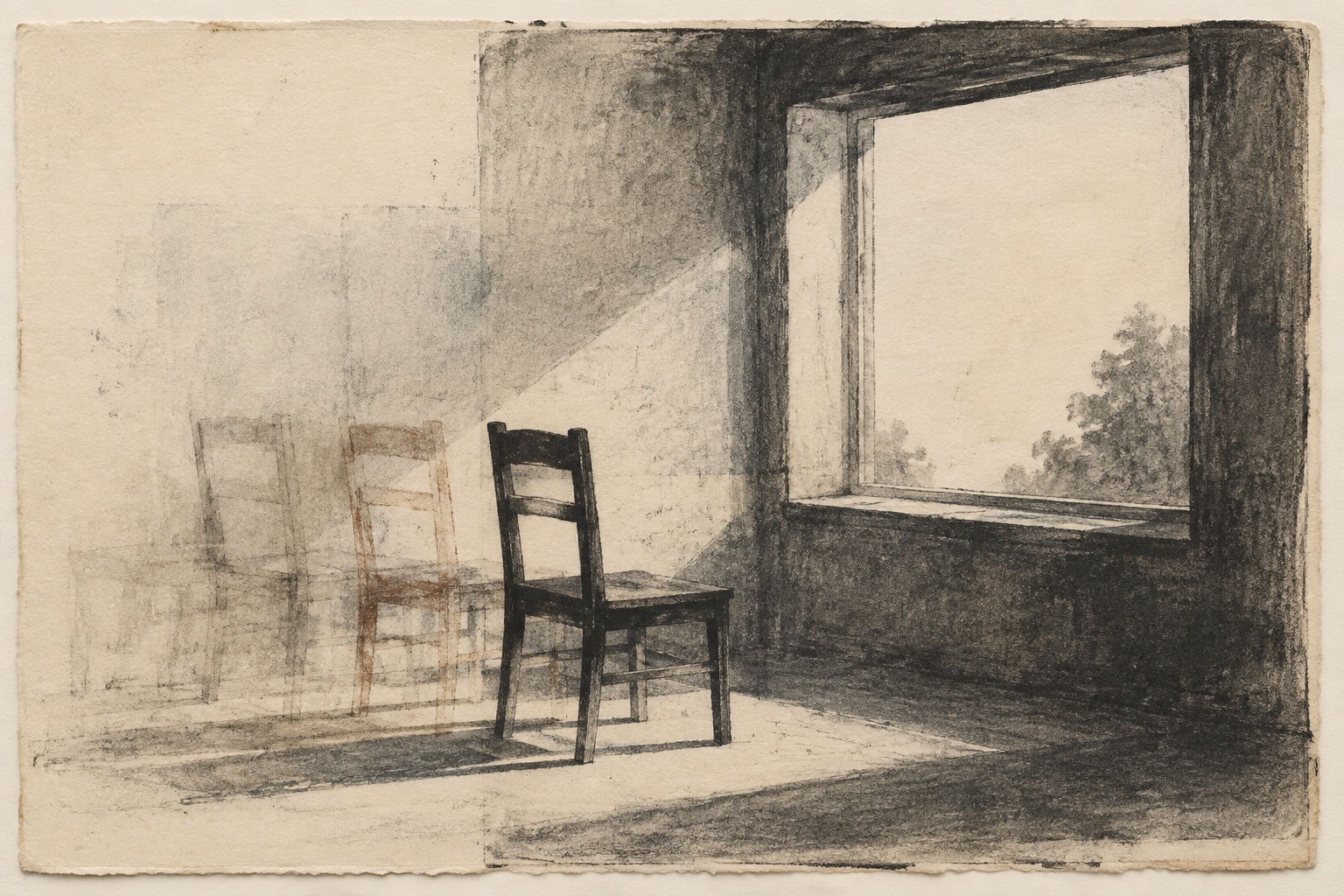
Not my school. An illustration, and already too definite.
Not a factual reconstruction“I feel held back.”
A feeling, described then.“Was I also making excuses?”
A later question about the explanation.Keep both statements, their dates and the uncertainty between them.
I would rather keep an untidy record:
- the original statement, with its date and source
- the later doubt, without promoting it to the final answer
- the evidence behind each interpretation
- corrections that reach the summaries built from them
- deletion that follows those summaries too
The note is gone. Its summaries may not be.
Derived records need deletion tooHuman recall changes as new information arrives. Experiments have found later material mixed into recall of an earlier event, although the explanation for that result is debated.12 I cannot inspect the biological trace of Class 12. A software system can show me what it extracted, what changed and which summary came from which source. If it hides that history behind one confident paragraph, it has thrown away an advantage it could have had.
When a memory should stay quiet
There is another gap in the pseudocode. It waits for a query. This morning I did not ask, “How did I understand freedom in Class 12?” The song made school relevant before I had formed the question.
A system can use other triggers: a calendar event, a place, a song being played, a document being opened. That part is approachable. Then comes the harder question. The next time I play “Song for Zula,” I may just want to hear the song. An assistant bringing up my family every time would become unbearable.
Generative Agents offered one precedent for ranking memories by recency, importance and relevance, then forming higher-level reflections.13 A personal system needs another kind of feedback. Was this interruption welcome? Is this a safe place to surface it? Has the person marked the subject private? Relevance alone is not permission. A thought inside my head has not yet crossed the boundary that a notification or spoken response would cross.

Sometimes I would rather hear the song.
A memory can remain privateI would test that decision alongside retrieval accuracy. LongMemEval already covers information spread across sessions, changing facts, time and cases where the system should abstain.14 I would add histories in which the person changes their interpretation, corrects the record, or says a subject should not be surfaced in a particular context.
Count the stale beliefs. Count missed corrections, unsupported claims, derived information that survives deletion, and interruptions the person did not want. Then ask the person whose history is involved whether the connection helped. A model grading another model cannot answer that last question.
There may be value in giving a system time between conversations to compare new statements with old ones. Human sleep research shows that reactivating a learned association during slow-wave sleep can affect later retention.15 Software does not need sleep. Background work could notice a conflict, trace an inference back to thin evidence, or recognise that a once-common topic has become unwelcome. That is enough. Calling the process a dream mostly makes the diagram prettier.

There is time to compare things later.
A visual analogy / not a biological claimThis morning the song brought back a clean old claim: I was being held back. A few minutes later the claim was no longer clean.
I still understand the person who believed it. I am less sure he was right.