In July 2025, a machine sat the International Mathematical Olympiad under the same clock as the teenagers and walked out with a gold medal — five of six problems, written in plain English, inside the four-and-a-half-hour limit. The human graders called its proofs clear and easy to follow. Then it went back to being unable to reliably read an analog clock. I have spent the eighteen months since trying to hold those two facts in one hand.
Headlines like that have been arriving faster than I can metabolize them. A protein-design model that invents enzymes evolution never tried. A child whose private genetic typo was corrected by a drug written for him alone, in six months. A reactor that returned more energy than its lasers delivered, four times over. A telescope reading light from when the universe was a toddler — sitting next to a result that hints we cannot name most of what that universe is made of.
The easy move is to file all of it under one word — progress — and scroll on.
I think that is a mistake, because these breakthroughs do not actually share a topic. They share a mechanism, and the mechanism came with a bill that most of the coverage forgets to read. Once you see it, the year stops looking like a list of miracles and starts looking like a single trade we made without quite noticing.
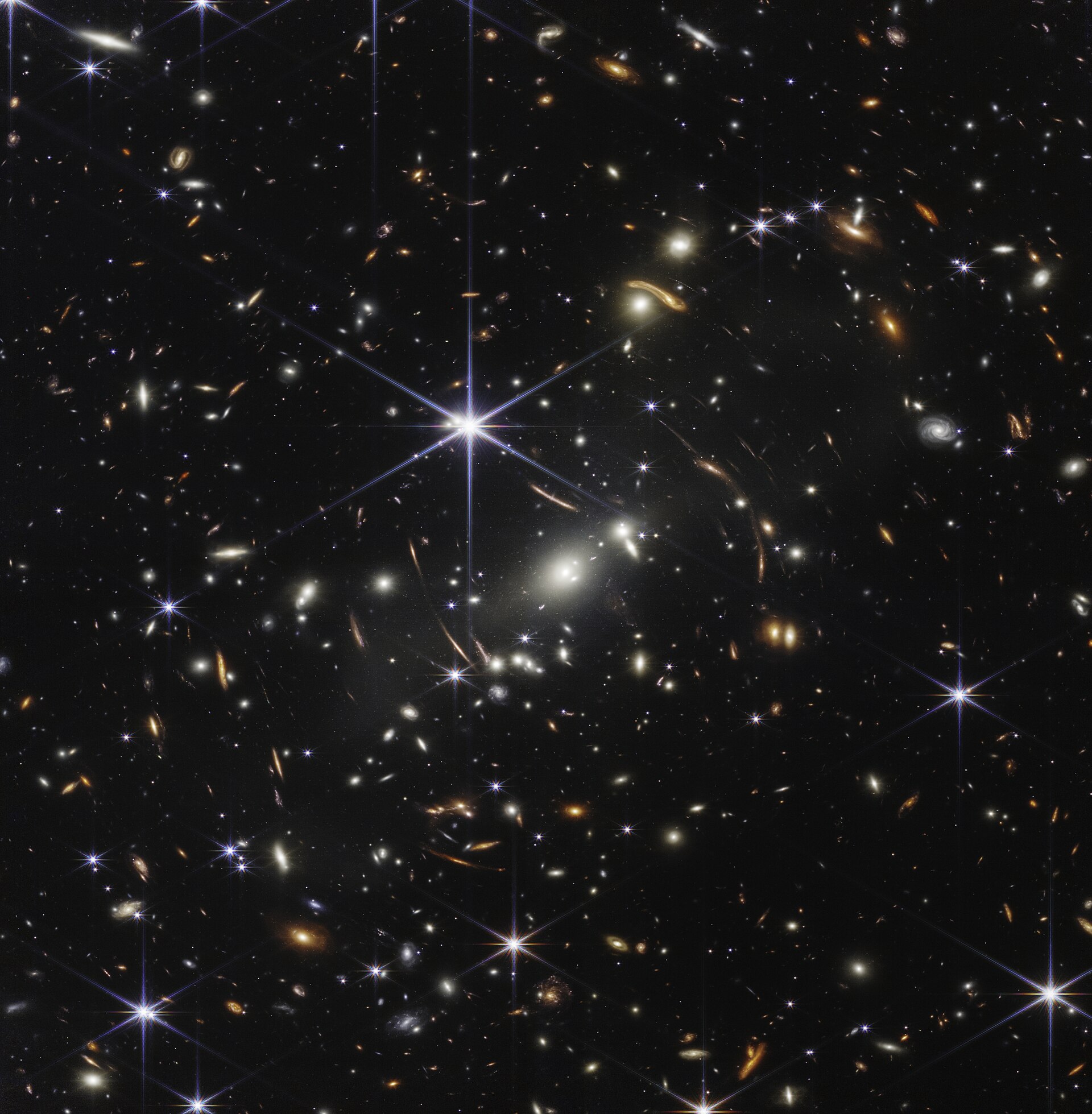
Here is the shift, stated plainly. For most of the history of science the scarce resource was never data, money, or even instruments. It was a human being holding an entire problem in one skull long enough to have the right idea. Newton, alone, for two plague years. Darwin, alone, for two decades. Discovery moved at the speed of cognition, one hypothesis at a time.
That cap is the thing that broke.
And breaking it cost us something we are only now learning to name. For four centuries, doing and understanding rose together — you could not build the engine without first grasping the heat. In the last eighteen months they came apart. We started shipping the doing while the understanding fell behind.
Two Kinds of Knowing
Information is knowing that something is so — a map that reliably gets you there. Jñāna, in Vedanta, is the deeper kind: knowing because you have seen why, directly. For most of science's history the two arrived together. The defining feature of this frontier is that they have separated — we are now accumulating the first far faster than the second.
It helps to picture discovery as a pipeline with one narrow point. Ideas go in, experiments run, and what survives comes out the other end as something you can build on. The throughput of that pipeline is set by its narrowest section. For four hundred years that section was us.
The machines did not make scientists smarter. They attacked the first two terms — the number of hypotheses worth generating and the number you can actually test — and they collapsed the third. Move the cap on a product and the whole expression jumps.
The machine that reasons — and runs the experiment
Start with mathematics, because math is where intelligence has nowhere to hide. No corpus to memorize, no benchmark to game by vibes. You construct the proof or you don't.
The 2025 Olympiad result was a true step change, and the year-over-year comparison is the tell. In 2024, DeepMind's AlphaProof and AlphaGeometry took silver — four of six problems, twenty-eight points — but only after humans hand-translated each problem into formal logic, and only after two to three days of computation. The 2025 system worked in plain language, end to end, inside the student time limit, graded by the same humans on the same rubric.
That is the distance between a calculator and a colleague.
And it is not a fluke of one contest. Stanford's 2026 AI Index put hard numbers on the slope: frontier models jumped thirty percentage points in a single year on Humanity's Last Exam, a test purpose-built to be cruel to machines and kind to human experts. Six labs now sit clustered at the very top within a hair of each other; the gap between the best American and Chinese models has shrunk to under three percent; agents went from barely operating a computer to finishing roughly two-thirds of real desktop tasks.
And the same report records, almost sheepishly, that these systems read an analog clock correctly about half the time. Humans manage ninety percent.
Gold at the Olympiad. Beaten by a wall clock.
This is what people keep getting wrong. We did not build a smaller mind and wait for it to grow up. We built a different kind of mind, with a capability surface so jagged it humiliates our intuitions in both directions at once. Asking "how smart is it" and expecting a single number is the category error. There is no number. There is only the terrain.
The deeper shift is that these minds have stopped taking our exams and started running our experiments. The keystone is AlphaFold. It cracked a fifty-year-old problem — a protein's three-dimensional shape from its raw sequence — and earned the 2024 Nobel Prize in Chemistry. The scale is the part that undersells in a sentence: the public database now holds structures for more than two hundred million proteins, used by over three million researchers, and AlphaFold 3 extended the trick to DNA, RNA, and the small molecules drugs are made of. It is not a result anymore. It is infrastructure other discoveries are now built on top of.
Then the hypotheses themselves started coming from the machine. In early 2025, Google ran an "AI co-scientist" — not one model but a committee of them, arguing, ranking, and refining each other's ideas — and on a question about antimicrobial resistance it proposed a specific mechanism for how genes jump between bacteria that matched experimental findings not yet published. It did not read the answer. It re-derived it.
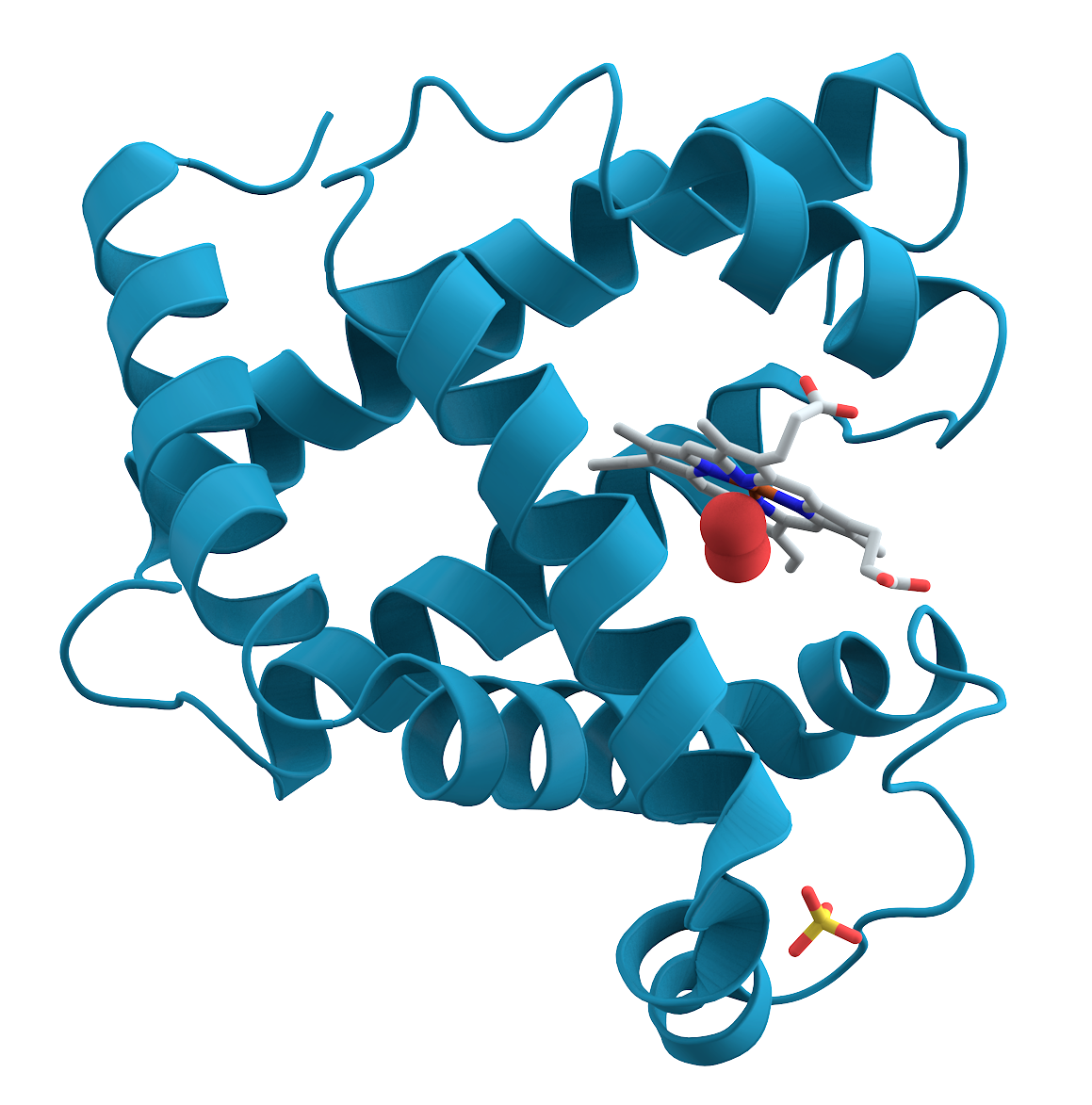
The part that genuinely unsettles me is generative design. David Baker's lab now builds working enzymes that evolution never produced, from scratch, and gives the tools away. In April 2026, a team at McMaster and Stanford reported an AI-designed antibiotic against drug-resistant Staphylococcus aureus, found by exploring up to forty-six billion candidate compounds — where a physical screen tops out near a million. I want to be precise, because precision is the whole ethic here: that molecule is preclinical, tested only in mice, with a mechanism the authors openly admit they cannot yet explain. The gap between "works in a mouse" and "works in a person" is where most miracles quietly die.
I recognize this shape from my own work. At NeoSapien we build systems that listen to a life and decide what matters — which moment becomes a memory, which thread connects to which. They work. And I cannot fully derive why a model finds one fragment salient and discards another; the behavior is learned, not reasoned out from first principles. We ship the capability and study the explanation afterward, if at all. The frontier labs are doing the same thing, with proteins and proofs instead of conversations.
A theorem you can read but cannot follow. A molecule that works for reasons no one can state. The answer arrives; the understanding is on back-order.
Biology you can now program
Biology crossed a line in the last two years that almost everyone outside it slept straight through.
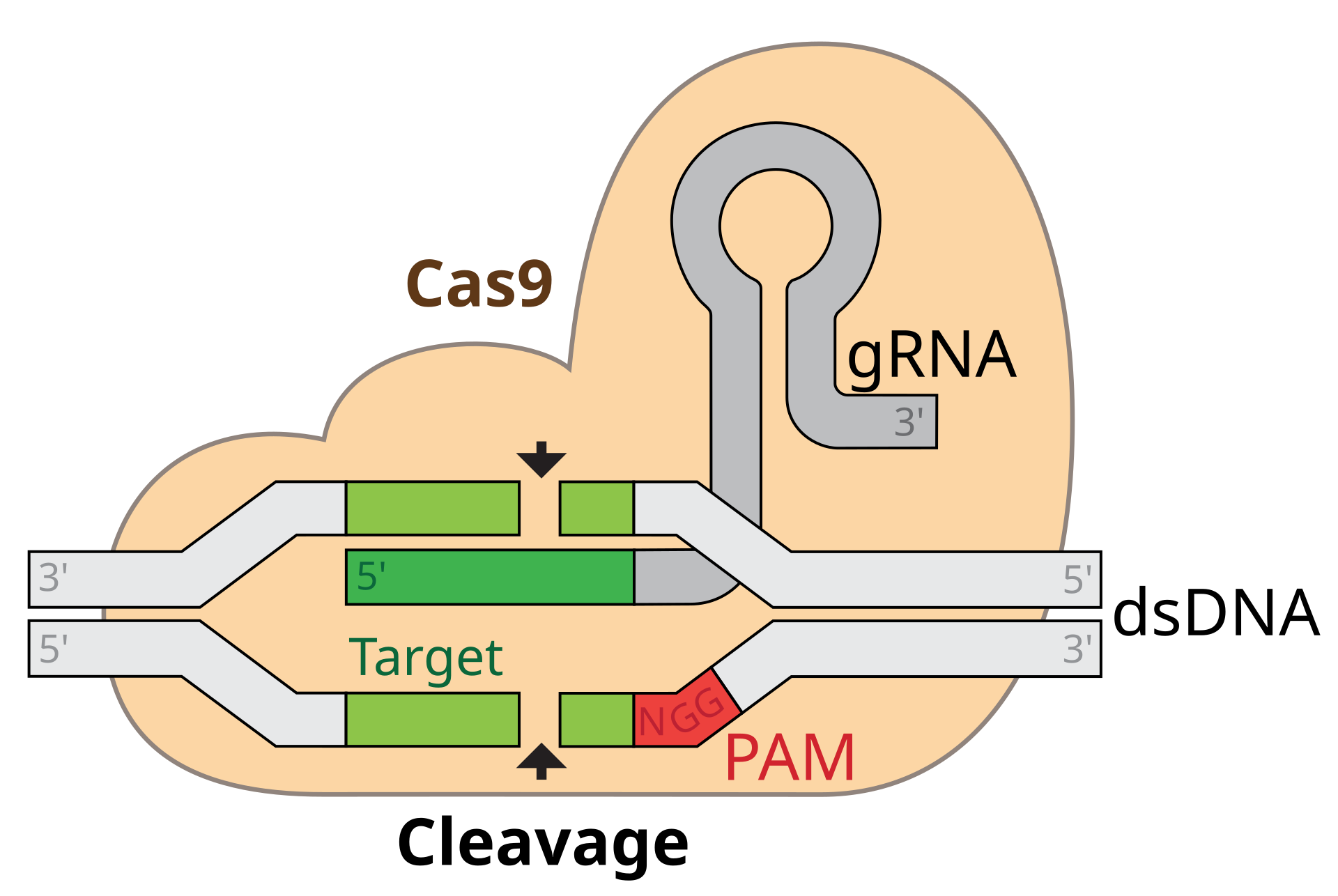
December 2023: the first CRISPR medicine was approved. Casgevy, for sickle cell disease — take a patient's own blood stem cells, correct the defect, return them. In the pivotal trial, twenty-nine of thirty patients went at least a full year without the vaso-occlusive crises that define the illness. Careful editing, outside the body, in a dish.
Then it went inside the body, and it got personal.
May 2025: a team at CHOP and Penn treated an infant — KJ — born with a urea-cycle disorder so rare it was effectively his alone, caused by his own particular mutation. They designed a base editor for that exact typo, manufactured it, and dosed him — variant identified to child treated in about six months. He started tolerating protein, needing less medication, surviving ordinary infections that had been emergencies. The durability is unproven and the follow-up is short, and the honest people on the team say so out loud. But the proof of concept is the headline: a medicine with a patient population of one.
And it is becoming routine enough to have dull, gorgeous dose-response curves. VERVE-102, an in-body base editor aimed at a cholesterol gene, dropped LDL by an average of fifty-three percent at its top dose from a single infusion — durable, with deeper cuts in the longer readout. One shot, rewriting a gene in your liver, to do permanently what a daily pill does by force.
Cells in a dish, to a child's liver, to a drug for one genome — in roughly eighteen months. What used to be the premise of a novel now has a side-effects table.
We rewrote a child and watched it work. Whether it is safe for the next forty years is a question we now answer after the dose — because there is no one else to ask.
The machine that reads the mind
Then the frontier turned inward, onto the exact patch of ground I live on.
This is NeoSapien's problem stated in neurons: a machine trying to capture what a person means, faithfully, without overstepping. So I read these papers less like news and more like a mirror held up to my own field.
June 2025: a UC Davis team gave a man with ALS his voice back in real time. Electrodes over his speech cortex, a model turning neural activity into synthesized speech with about twenty-five milliseconds of lag — a fortieth of a second. Listeners understood roughly sixty percent of what it said for him, against four percent of his own unaided attempts. He could say words it had never been trained on, and bend the pitch. Not a keyboard. A voice.
Then it got stranger. In August 2025, a Stanford-affiliated group decoded inner speech — sentences only imagined, never attempted — straight from motor cortex. Error-prone still, roughly half right on a huge vocabulary. The half of the paper that stopped me cold was the ethics, built in rather than bolted on: they confirmed that fragments of private inner speech leaked into the decoder, and then engineered the fix in the same breath — a mental password that gates the system on and off with nearly ninety-nine percent reliability.
I cannot overstate how much that one design choice matters to me. The entire moral shape of my field is compressed into it: a system that can read intention, and a deliberate lock so that it reads only what you choose to hand over. That is the difference between a prosthetic and a wiretap — and the researchers put it in the first paper, not the apology tour. Meanwhile Neuralink has crossed twenty-one human implants with no serious device-related harm reported, one participant typing forty words a minute by thought alone, and a new trial aimed straight at conversational speech.
Vedanta treats inner speech as a ripple on the surface of the mind, not the mind itself — the witness sits beneath the words. These machines have learned to read the ripple with no theory of the witness. They decode the signal of a thought without any account of what a thought is.
A machine that can hear the voice inside your head is a tool only as long as you hold the key. Without that key it is the most invasive instrument ever built.
The frontier that still works the old way
Now set all of that beside a different kind of news — because the contrast is the argument.
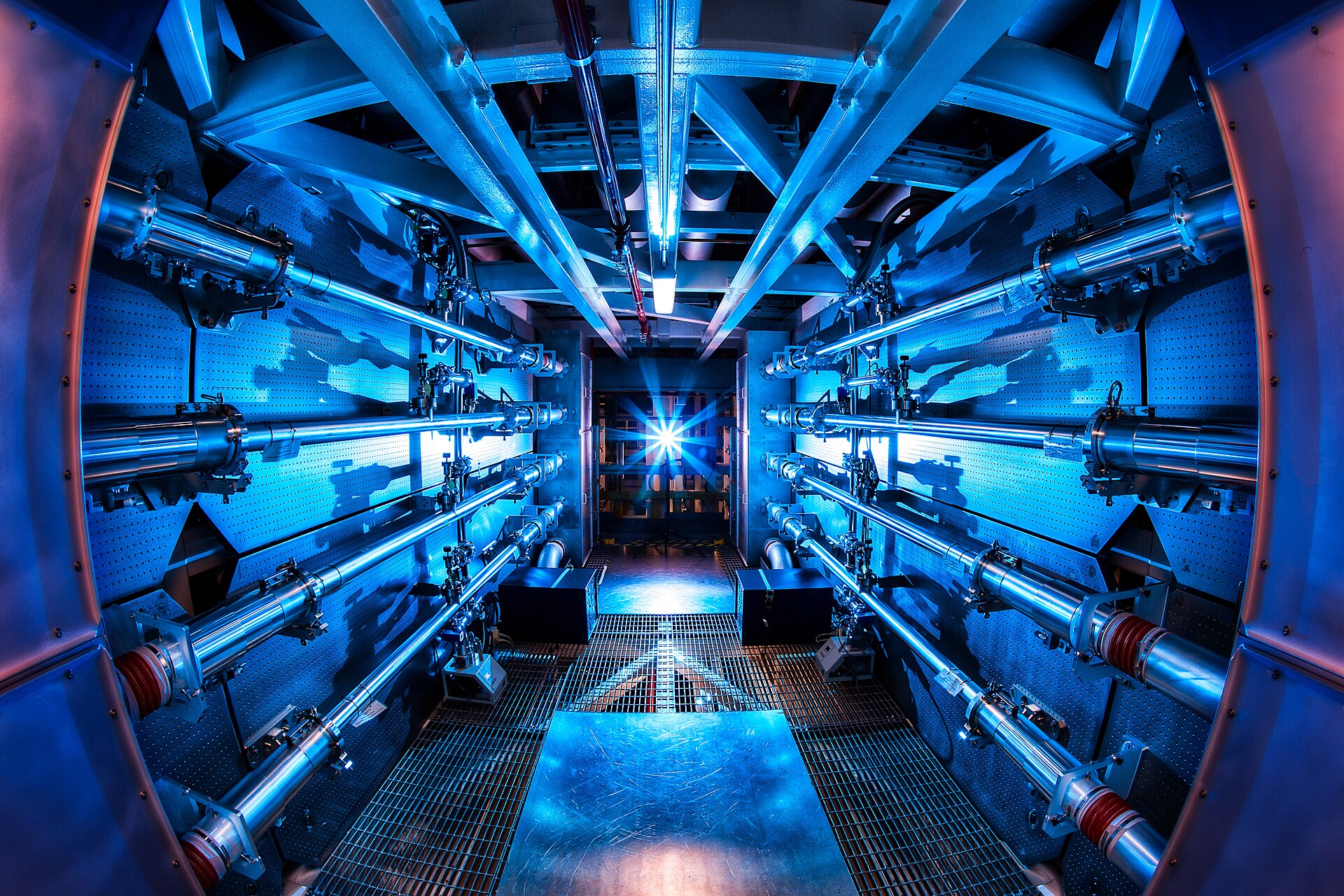
Fusion stopped being a punchline. In December 2022 the National Ignition Facility pulled more energy out of a fuel pellet than its lasers put in — real ignition, the thing that had been thirty years away for fifty years. The decisive word turned out to be the boring one: again. They have repeated it many times since, with climbing yields, reaching a shot in April 2025 that returned more than four times the delivered laser energy. And the engineering is moving past the lab — Commonwealth Fusion has begun installing the giant superconducting magnets for a grid-scale demonstration reactor, roughly three billion dollars in, aiming for power on the grid in the early 2030s.
Quantum computing crossed a quieter, deeper line. The open question for years was whether error correction could ever net out — whether adding qubits to protect a logical one would help more than the fresh errors they introduce. In early 2025, Google's quantum team showed that it does: scale the code up and the logical error rate falls exponentially; the protected qubit outlived its best physical component. Below threshold, at last — the milestone the field had waited a quarter century to see.
Here is why these belong in a different column from everything above. We have understood the physics of fusion since the 1930s and quantum mechanics for a century. Nothing in either result is mysterious — it is engineering finally catching up to theory we already trusted. This is the old kind of triumph: understanding first, capability second. And notice the price of doing it that way — fifty to a hundred years, tens of billions of dollars, whole careers spent inside a single problem. It is legible. It is also glacially slow.
This is what the frontier looks like when we truly understand it: slow as a lifetime, and clear as glass. The rest of the year was fast precisely because it skipped that part.
And then the universe said: you still don't know what I'm made of
This is the part that keeps me honest.
While capability sprinted ahead in biology and AI, the deepest questions got less settled, not more. The same eighteen months delivered a quiet, humbling correction to our confidence — and it landed hardest exactly where we feel surest.
Cosmology is the cleanest example. DESI, mapping millions of galaxies, has built mounting evidence that dark energy — the roughly seventy percent of the universe driving its expansion apart — may not be a constant at all, but something drifting over time. If it holds, it cracks the standard model of cosmology and rewrites the ending of the universe. I have to be careful here, and so should you: the signal sits between about three and four sigma, and it wobbles depending on which supernova set you bolt on. Physics reserves the word discovery for five sigma. This is not that yet. It is a serious, possibly historic maybe.
And the maybe is the entire point.
Because the same field is littered with the wreckage of people who skipped the maybe. LK-99, the room-temperature superconductor that broke the internet in 2023, wasn't one — the dramatic resistance drop was an impurity changing phase, dismantled by careful labs within weeks. The broader saga produced a string of retracted superconductivity papers and a formal finding of research misconduct against a prominent physicist. The lesson is not that scientists are crooks. It is that the appetite to believe is itself a force, and it does not respect peer review.
The most humbling result came from the study of consciousness — the one phenomenon each of us is most certain exists. A large, preregistered, adversarial collaboration pitted the two leading theories against each other across hundreds of subjects and three brain-imaging methods, and reported in 2025 that neither won. Both took damage. The single thing you are most sure of right now — that there is something it is like to be you, reading this line — has no theory that survived honest contact with the data.
The sigma trap: treating a three-sigma hint as a fact because it's exciting. The press-release frontier: a result's fame outrunning its replication. The file drawer of fusion timelines: every "almost" that quietly never arrived. When the denominator — how badly you want it true — dominates the numerator, you get LK-99.
Here understanding is not lagging behind capability or racing ahead of it. It is retreating — even as the data pours in faster than ever.
Maps without comprehension
So what did the last eighteen months actually do?
Look at the shape of it. In AI, in biology, and in the reading of minds, capability has sprinted out ahead of understanding. In fusion and quantum, understanding still leads — and pays for it in decades. In cosmology and consciousness, understanding is sliding backward while the instruments get sharper. Three different relationships between doing and knowing, in the same twelve months. The frontier is no longer any one of those fields. It is the distance that has opened between the two.
AlphaFold predicts a structure it cannot explain. A base editor saves a child no one derived from first principles. A model writes a proof we can read but cannot follow. We are accumulating working maps far faster than we are accumulating any grasp of the territory they describe.
This is the gap I named at the start. Information without jñāna. The right answer with the reason still missing.
I don't offer that as a lament. I offer it as the new job description. For four centuries the two rose together; now they have split, and the discipline has to learn to live in the seam. Which makes the oldest virtues more load-bearing, not less. Karma yoga, almost literally: do the work, verify ferociously, and hold every result lightly — most of all the ones you most want to be true. The whole skill is catching the appetite to believe at work in yourself, and refusing to let it nudge the decimal point.
The machines moved the bottleneck. They did not move the burden of being honest about what we actually know. That part never automated. And it weighs more now, because the answers are arriving faster than the wisdom to hold them.
The frontier is no longer the edge of what we can do. It is the distance that has opened between what we can do and what we can understand.