

AI hardware is where the vibes go to die.
A model can hallucinate in a chat window and everyone gets philosophical. Put the same model in a robot, drone, car, wearable, or defence system and the error has weight. Sometimes literally.
So the state of AI hardware in June 2026 is not "robots are here" or "AI wearables failed" or "drones changed everything." All of those are half-true. The better answer is this:
AI is moving from screens into machines, but the winning machines are not the most intelligent. They are the best-constrained.
The software frontier wants generality. Hardware punishes generality. Batteries are finite. Motors break. Sensors get dirty. Latency matters. Heat matters. Connectivity disappears at the worst possible time because physics enjoys comedy.
This is where things actually stand.
The AI-plus-hardware market is splitting into two worlds: high-value constrained autonomy that is shipping now, and ambient systems that turn context, memory, and permissioned action into the next computing interface.
The Real Shift: Edge AI Is Becoming Normal
The old pattern was simple: device captures data, cloud does intelligence, device shows result. That still works for chat, search, summaries, and low-stakes assistants. It does not work cleanly for machines that move.
Robots, drones, cars, glasses, medical devices, factory cameras, and battlefield sensors need local inference because latency, privacy, bandwidth, and connectivity are not edge cases. They are the job.
That is why 2026 hardware announcements all rhyme. NVIDIA Jetson Thor targets real-time robotics and multi-sensor processing. NVIDIA IGX Thor is aimed at industrial, medical, and safety-critical edge systems. Qualcomm is expanding edge AI and IoT platforms across industrial, embedded, automotive, and robotics use cases. Intel is packaging CPU, GPU, and NPU into AI PC and edge robotics systems. Skydio is flying drones with onboard Jetson compute. Meta is building glasses where the camera, mic, display, and wristband become the AI interface.
The important thing is not any single chip. It is the architecture pattern.
Cloud is for heavy thinking
Training, fleet learning, synthetic data, map updates, large context reasoning, and post-hoc analysis still want cloud infrastructure.
Edge is for action
Perception, control, safety fallback, low-latency interaction, and privacy-sensitive sensing increasingly need to run on-device.
The direction is hybrid. Cloud trains and coordinates. Edge perceives and acts. Anyone pretending one side replaces the other is probably not debugging thermal throttling at 2 AM.
Robotics: Useful Robots Are Narrow, Humanoids Are Still Proving Themselves
Robotics is having two conversations at once.
The first is boring and real: industrial robots, mobile robots, logistics robots, cleaning robots, medical robots, warehouse automation, inspection, agriculture, and construction. The International Federation of Robotics reported 542,000 industrial robots installed in 2024, with operational stock in China alone crossing 2 million. Professional service robots reached almost 200,000 units sold in 2024, and robot-as-a-service fleets grew 31%.
That is the real economy of robotics. It is not Twitter clips. It is factories, hospitals, warehouses, kitchens, fields, substations, and places where labor shortages are not a thought experiment.
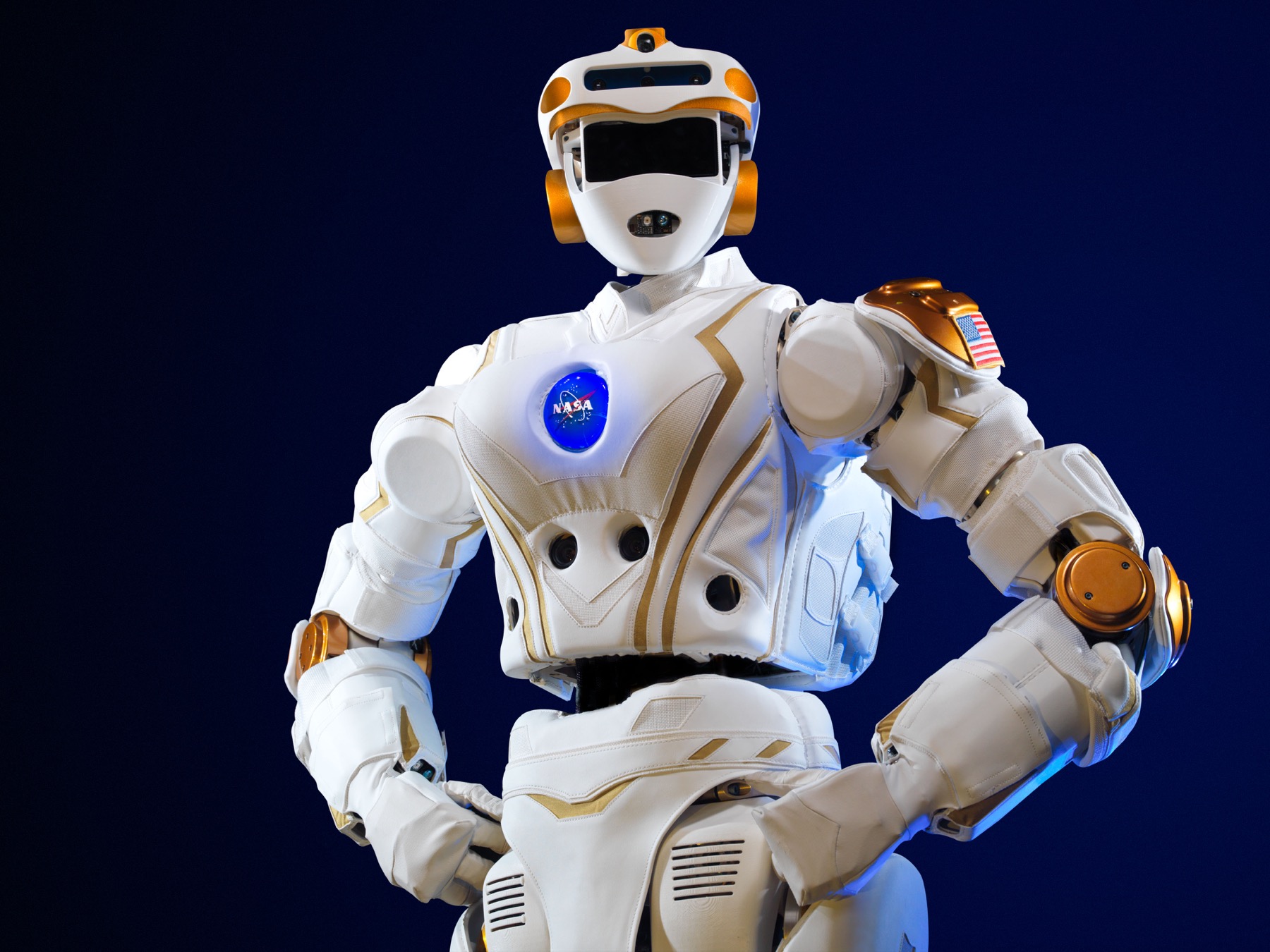
The second conversation is humanoids. This is where the heat is.
Humanoids make sense because the world is built for the human body: stairs, doors, shelves, handles, tools, kitchens, warehouses, and factories. But the body shape is also a tax. Balance is hard. Hands are hard. Battery life is hard. Safety is hard. Teleoperation is expensive. Data is scarce. Reliability is the actual product.
The technical progress is real. NVIDIA has Isaac GR00T models, Cosmos world models, Jetson Thor onboard compute, simulation tooling, and a 2026 open humanoid reference design with Unitree and Sharpa hardware. Google DeepMind has Gemini Robotics and Gemini Robotics On-Device. Physical Intelligence has pi0 and pi0.5. RT-2 and other vision-language-action models made the category legible. The model class is no longer science fiction.
But the deployment reality is still early. Humanoids are getting better at demonstrations and controlled pilots. The question for 2026 is whether they can become economically boring.
AI Wearables: The Real Category Is Ambient AI
The first version of this section was too blunt. It treated the market like a form-factor race: glasses winning, pins punished, watches quietly useful. That is directionally useful, but incomplete.
The deeper category is ambient AI.
Ambient AI is not a gadget shape. It is a relationship between the user, their environment, their memory, and the agents acting on their behalf. The variables that matter are capture continuity, sensor position, social permission, output bandwidth, privacy model, battery life, and whether the system can turn context into useful action.
Glasses matter because they sit on the face and align vision, audio, output, and attention. Meta's Ray-Ban line is strong for that reason. The new display version adds glanceable feedback, captions, translation, navigation, and EMG wrist input. That is not just a better screen. It is a more situated interface.
But glasses are not the whole ambient stack.
Watches and rings own physiological context. WHOOP Coach and Oura Advisor point toward AI that interprets sleep, recovery, strain, stress, cycle, and behavior patterns over time. Audio pendants own conversation memory and intent capture. Bee, now at Amazon, frames this as ambient AI across conversations, emails, calendars, and health data. Limitless is similar: a wearable microphone that remembers conversations and connects that memory into other tools. Headphones own private output and acoustic context. Phones still own compute, identity, payments, and app permissions. Rooms and cars own environmental context.
So the right question is not "which wearable wins?" The right question is "which ambient variable does this device own?"
This is also where the research is moving. The recent large sensor model work argues that wearable AI needs foundation models trained on multimodal sensor data: motion, physiology, audio context, behavior, and time. That matters because human context is not a single stream. It is a messy braid of signals. Welcome to hardware. The data has sweat on it.
This is also how we think about the work at NeoSapien. The interesting frontier is not a standalone gadget that tries to replace the phone. It is ambient capture, memory generation, retrieval, and agentic assistance across the moments people normally forget. The trust layer is not a feature. It is the product.
- Glasses: own visual context, conversational assistance, live translation, navigation, and heads-up feedback.
- Watches and rings: own physiology, motion, recovery, sleep, stress, and longitudinal health context.
- Pendants and audio wearables: own ambient conversation, memory, commitments, meetings, lectures, and personal recall.
- Headphones: own private output, acoustic scene understanding, translation, and low-friction voice control.
- Phones: remain the permission, identity, payment, app, and compute anchor for many ambient systems.
- Homes, cars, and workplaces: own environmental state, routine, safety, location, and shared context.
Ambient AI is not about wearing more computers. It is about making the right context available at the right moment, with the right permission.
Compare the ambient variables
Best for visual context, glanceable feedback, translation, navigation, and hands-free assistance.
Main constraint: camera privacy, display battery, social acceptance, and avoiding constant notification sludge.
Drones: Autonomy Is Already Useful Because Flight Is Constrained
Drones are the most honest AI hardware category because they expose the economics quickly. You either get the data, cover the area, survive the environment, and return home, or you have made an expensive lawn dart.
Civil drones are moving from piloted camera platforms toward remote operations, docked deployments, automated inspections, drone-as-first-responder programs, and beyond-visual-line-of-sight operations. DJI Dock 3 is an example of the "drone in a box" direction. Skydio X10 is an example of onboard autonomy becoming the product: obstacle avoidance, thermal sensing, subject tracking, night operation, remote ops, encryption, and field software updates.
Regulation is still the limiter. The FAA's BEYOND program logged tens of thousands of BVLOS flights in Phase 1, and Phase 2 runs through 2029. The proposed Part 108 BVLOS framework shows where the US is going: more routine autonomous commercial drone operations, but with operator responsibility, aircraft requirements, and compliance layers.
The technical direction is obvious: drones become robotic sensor networks.
- Inspection: utilities, construction, bridges, mines, oil and gas, solar farms, substations.
- Public safety: drone-as-first-responder, search, incident awareness, disaster response.
- Delivery: medicine, food, retail, and logistics where regulation and density allow it.
- Security: perimeter awareness, base security, counter-drone sensing, and rapid response.
The hard problems are airspace integration, detect-and-avoid, weather, reliability, cybersecurity, operator accountability, and public trust. The drone can fly. The system around the drone is the slow part.
Defence Tech: AI Hardware Is Becoming Distributed, Attritable, and Networked
Defence is where AI hardware gets both more real and more morally loaded.
The trend is not one superweapon. It is distributed autonomy: sensors, drones, autonomous surface and undersea vehicles, counter-UAS systems, command-and-control software, electronic warfare, targeting support, logistics automation, and AI decision support. Anduril's Lattice, Shield AI's Hivemind, Skydio's autonomous drone infrastructure, the DoD Replicator initiative, counter-UAS programs, and autonomous undersea systems all point to the same architecture.
The battlefield lesson is nasty but clear: cheap autonomous or semi-autonomous systems can impose costs on expensive platforms. Defence procurement is responding by moving from exquisite systems toward swarms, attritable platforms, software-defined sensing, and faster upgrade loops.
That does not mean full autonomy should be treated casually. It means governance becomes part of the weapon system. The DoD's Responsible AI pathway and Directive 3000.09 exist because autonomous and semi-autonomous systems need testing, human judgment, disengagement paths, and accountability. The UK defence AI policy says the quiet part plainly: human-machine teaming is the default approach, and context-appropriate human involvement is required for weapons that identify, select, and attack targets.
Autonomous Vehicles: Robotaxis Are the Most Mature Physical AI Product
Autonomous vehicles are not new, but 2026 is important because deployment is finally becoming measurable instead of purely narrative.
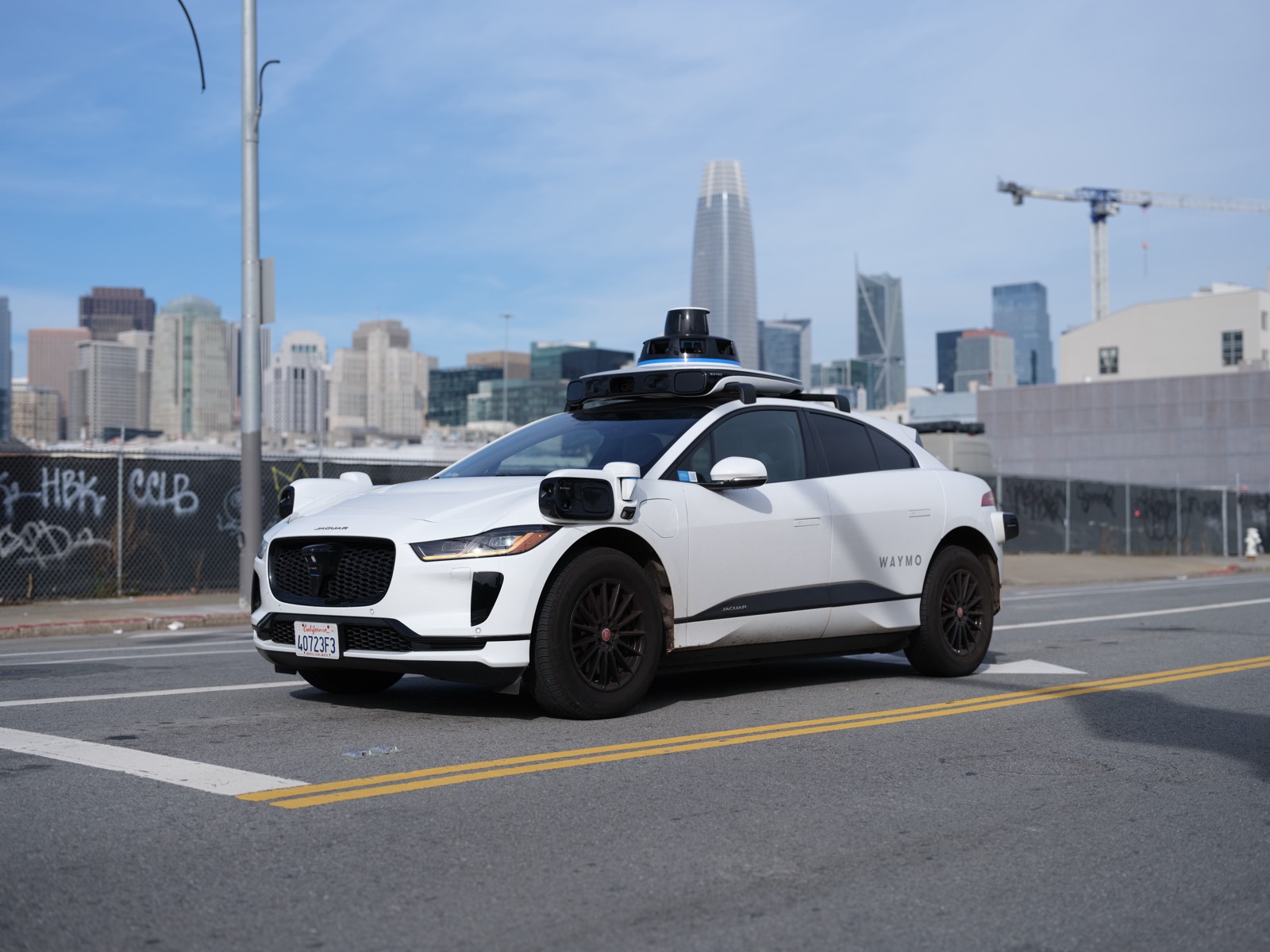
Waymo says its sixth-generation Driver is operating fully autonomously after nearly 200 million fully autonomous miles across 10-plus major cities and freeways. The interesting part is not just the mileage. It is the hardware strategy: redundant sensors, better cameras, fewer components, lower cost, and a fleet operations model that treats autonomy as a full-stack service.
Tesla is the opposite architectural bet: camera-heavy, consumer fleet, supervised FSD, and a push toward autonomy through scale. Tesla's own support page still says FSD (Supervised) requires active driver supervision and does not make the vehicle autonomous. That sentence matters. It is the line between driver assistance and deployed autonomy.
NVIDIA DRIVE Hyperion and Halos OS show a third path: supply the compute, safety architecture, sensor stack, simulation, and software foundation to automakers and robotaxi operators. The AV industry is moving from "who has the best demo?" to "who can make the safety case, cost case, and operations case city after city?"
Autonomy is not a model release. It is a city-by-city deployment business.
The Maturity Map
Here is the uncomfortable scoreboard.
The Shared Bottlenecks
Every AI hardware category looks different from the outside. Inside, the bottlenecks rhyme.
Power and thermal
Models want compute. Wearables, drones, robots, and vehicles want battery life and predictable heat. Physics is still the adult in the room.
Latency and reliability
Real-world systems need bounded response times. "Usually works" is not a control policy.
Data loops
Robotics data is expensive because reality is slow. Simulation helps. Teleoperation helps. Synthetic data helps. None of them erase field data.
Safety cases
Hardware products need fallback modes, operator control, certification, audit trails, and a story regulators can understand before lunch.
The next phase of AI hardware will be decided less by model cleverness and more by systems engineering: perception stack, edge compute, actuator quality, test coverage, fleet learning, manufacturing, repair, compliance, and support.
Very glamorous. Very real.
What I Would Watch Next
First, VLA and world models for robotics. The shift from language models to vision-language-action models is the right direction. The question is whether they can generalize under latency, safety, and embodiment constraints.
Second, edge compute becoming standardized. Jetson Thor, IGX Thor, Intel edge NPUs, Qualcomm edge platforms, and similar systems are turning physical AI hardware into something more repeatable. That matters more than another demo arm folding laundry.
Third, ambient AI wearables. Glasses may be the strongest visual interface, but the next frontier is the memory and assistance layer across glasses, watches, rings, pendants, headphones, phones, rooms, and cars. The key question is whether privacy, consent, battery, and developer access mature fast enough.
Fourth, drone regulation. BVLOS rules are the unlock. The drone hardware is already good enough for many jobs. The legal and operational stack decides scale.
Fifth, defence autonomy governance. This will move fast because the incentives are brutal. The hard problem is keeping humans meaningfully in command while the system gets faster, more distributed, and more autonomous.
The cleanest summary is this:
AI hardware is not waiting for AGI.
It is waiting for constraints.
Give the machine a bounded job, a strong sensor stack, enough edge compute, a tight safety loop, and a real operations model, and it starts to look inevitable.
Ask it to be a general-purpose human with motors, and the invoice arrives quickly.
Sources
- IFR World Robotics 2025 industrial robots release, IFR service robots release, and IFR Top 5 Robotics Trends 2026
- IFR AI in Robotics position paper announcement and IFR humanoid robots position paper announcement
- NVIDIA Isaac GR00T reference humanoid announcement, NVIDIA physical AI models update, and NVIDIA Jetson Thor
- NVIDIA IGX Thor technical blog, Qualcomm edge AI and IoT release, and Intel Core Ultra Series 3 for edge AI robotics
- Google DeepMind Gemini Robotics, Gemini Robotics On-Device, RT-2, and pi0.5
- Meta Ray-Ban Display, Meta AI glasses prescription expansion, Meta AI glasses product guide, and Apple Watch ML activity model
- Amazon Bee wearable and ambient AI update, Limitless Pendant FAQ, Limitless bystander information page, Oura Advisor, and WHOOP Coach
- HP acquisition of Humane AI capabilities, Humane AI Pin shutdown coverage, Wearable AI in the Era of Large Sensor Models, foundation models for sensor-based human activity recognition, and Mark Weiser on ubiquitous computing
- DJI Dock 3 announcement, Skydio X10, Skydio X10 Cayley release notes, and Skydio Dock USCENTCOM deployment announcement
- FAA BEYOND program, FAA BVLOS proposed rule announcement, and FAA advanced UAS operations page
- Anduril Replicator autonomy selection, Anduril Series H and autonomy statement, Anduril counter-UAS systems, and Anduril XL-AUV program
- DoD Replicator release, DoD Responsible AI Strategy and Implementation Pathway, and UK defence AI approach
- Waymo sixth-generation Driver fully autonomous operations, Tesla FSD Supervised support page, and NVIDIA DRIVE Hyperion Level 4 adoption announcement